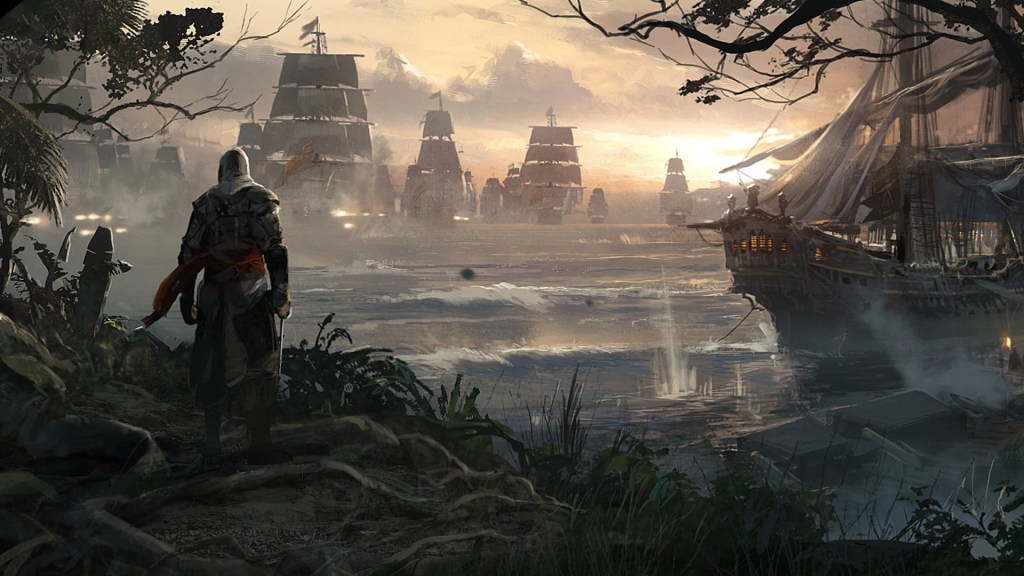
Nobody expected a twelve-year-old pirate game to become Ubisoft’s biggest win of the year. Assassin’s Creed Black Flag Resynced has sold over 3.5 million copies worldwide since its July 9 launch, and according to Ubisoft’s own Q1 fiscal 2027 report, that number already blew past what the company projected the game would sell across an entire 12 months. It took just 14 days.
I’ve been following Ubisoft’s rocky last couple of years pretty closely, and honestly, this is the first genuinely good news the publisher has had in a while. Star Wars Outlaws underperformed. Skull and Bones flopped hard enough to become an industry punchline. XDefiant burned bright and then lost its player base almost overnight before getting shut down entirely. So when CEO Yves Guillemot called Black Flag Resynced “an encouraging proof point” during the earnings call, it wasn’t just corporate spin. The numbers back him up.
How Black Flag Resynced Beat Ubisoft’s Own Expectations
The rollout timeline tells its own story. Resynced moved 2 million copies in its first 24 hours alone, a figure Ubisoft rarely shares openly. By July 17, that number climbed to 3 million. A week later, it hit 3.5 million, officially clearing the annual sales target Ubisoft had internally set before launch. Guillemot put it plainly during the call: “Two weeks in, the title has already exceeded the annual expectations we had.”
What I find interesting here is that this isn’t a brand new Assassin’s Creed entry riding marketing hype. It’s a remake of the original 2013 Black Flag, a game that had already sold over 15 million copies in its lifetime. People clearly wanted to sail those waters again. On OpenCritic, Resynced landed an 84 rating, just one point below the original’s 85, and notably ahead of Assassin’s Creed Shadows’ 81. Guillemot called it the highest-rated Assassin’s Creed title since the 2013 original, and that’s not a small claim for a franchise with this many entries.
The simultaneous launch across PS5, Xbox Series X/S, and PC also mattered more than people give it credit for. No staggered console exclusivity windows, no waiting months for a PC port. Everyone got access on day one, and the sales curve reflects that.
A Bright Spot Inside A Rough Quarter
Here’s the part that’s easy to miss if you only read the headline. Ubisoft’s overall Q1 fiscal 2027 net bookings still fell 9.2 percent year over year, landing at €256 million, or roughly $291 million. Back catalog bookings dropped 15 percent, largely because the same quarter last year included the massive launch bump from Assassin’s Creed Shadows.
So Black Flag Resynced isn’t single handedly rescuing Ubisoft’s financials. It’s one strong data point in a quarter that otherwise leaned on the mobile RPG Invincible: Guarding the Globe for its “record performance,” while the rest of the portfolio, including Rainbow Six Siege, simply performed in line with expectations.
Sources close to the earnings call noted that Ubisoft chose not to raise its guidance for Q2 or the rest of the fiscal year, citing a tougher lineup of competing releases and a difficult year over year comparison. That’s a cautious stance for a company that just had its best Assassin’s Creed reception in over a decade. I think that restraint says a lot about how fragile Ubisoft still feels its position is, even with a genuine hit on its hands.
Why Ubisoft Is Betting Big On Remakes Now
During the post-earnings breakdown, CFO Frédérick Duguet made a comment that’s going to shape Ubisoft’s strategy for years. He said remakes can deliver stronger margins than brand new releases, pointing to lower development costs, reduced marketing spend, and built in audience recognition. “We expect this one to deliver superior financial performance,” Duguet said, adding that Black Flag Resynced’s direct contribution is expected to turn positive this current quarter.
That’s a rumor turned reality now. Reports had circulated for months that Ubisoft was quietly reallocating resources toward remakes after Prince of Persia: Sands of Time Remake got canceled back in January, alongside other in development projects.
Industry insiders hinted that Assassin’s Creed 1 would be the next remake in line, and that speculation has only gotten louder since Resynced’s numbers came in. If the current trajectory holds, it looks like Ubisoft may lean on its back catalog far more heavily than fans originally assumed, especially with Beyond Good and Evil 2 still stuck in development limbo.
This is one of those things I genuinely got excited about the moment I saw it, mostly because it suggests Ubisoft learned something concrete from years of expensive live service misfires. Building on assets people already love, with less financial risk, is a much smarter play than betting hundreds of millions on another Skull and Bones.
The Microtransaction Backlash Nobody’s Talking About Enough
What most articles missed while celebrating the sales figures is the community reaction to Resynced’s monetization. Eight of the game’s nine microtransaction items are $10 cosmetic packs, and one particularly divisive add-on is a $5 “Map Pack” that doesn’t add any actual maps. Instead, it gives players a spyglass tool that reveals collectibles they could otherwise find on their own through exploration.
Players online have been vocal about how tone deaf that feels attached to a beloved single player pirate adventure, even as the base game earns praise for its improvements over the original.
I didn’t expect this angle to matter as much as it does, and that’s exactly why it’s worth mentioning. A remake can top sales charts and still generate real frustration among the people actually playing it. That tension between commercial success and player goodwill is going to follow Ubisoft into whatever remake comes next.
What This Means For The Next Year Of Assassin’s Creed
Black Flag Resynced has given Ubisoft something it desperately needed: proof that its restructuring, including painful studio closures in Winnipeg and Belgrade along with ongoing layoffs in its publishing division, might actually be steering the company somewhere useful. Ubisoft has publicly stated it expects a “significantly stronger and diversified pipeline” across fiscal years 2027 to 2029, built around Assassin’s Creed, Far Cry, and Ghost Recon.
I believe the real story here isn’t just one remake selling well. It’s a struggling publisher finding a repeatable formula in a market that’s gotten brutally unforgiving toward anything less than a sure thing. Whether that formula holds up once the novelty of “playing Black Flag again” wears off is the question worth watching over the next year, especially as more Assassin’s Creed remakes make their way through Ubisoft’s newly reorganized creative houses.


