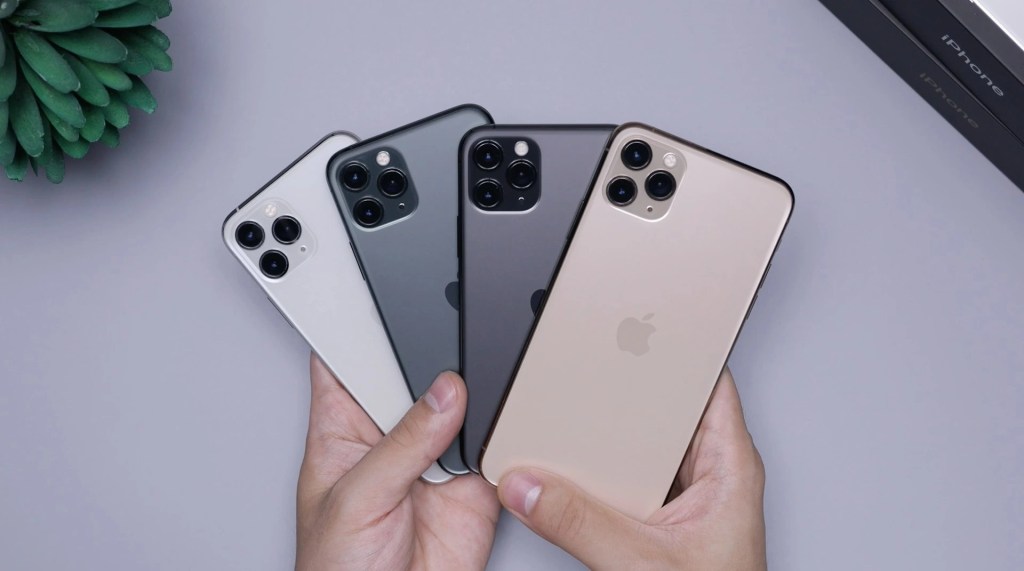
Apple just named its most important product launch in a decade after two things it already killed.
On September 9, 2026, at Apple’s “Surprise and Shine” event, the company introduced the iPhone Duo, its first foldable phone and the first Apple device with a flexible display. For years the internet called it the iPhone Ultra or the iPhone Fold. Bloomberg’s Mark Gurman leaked the actual name less than 24 hours before the keynote, and it turned out to be the one option almost nobody took seriously: Duo. Apple has used that word before.
It named a line of laptops Duo in the 1990s. It named a charging accessory Duo in the early 2020s. And Microsoft, notably, built an entire dual-screen Android phone called the Surface Duo that flopped so badly it was discontinued. In my opinion, reviving a word with that kind of baggage is a strange flex, but it’s also very on-brand for a company that isn’t afraid to reuse names once it thinks it’s finally gotten the idea right.
What nobody expected was how much substance came with that name.
A Name With a Complicated History
The PowerBook Duo was Apple’s attempt at a modular laptop that docked into a desktop shell, and it quietly disappeared after a few generations. The MagSafe Duo Charger lasted a bit longer before Apple stopped selling it. Now the word gets attached to the most expensive iPhone Apple has ever sold. I’ve been following Apple’s naming decisions for a while, and honestly, the pattern says something. Apple doesn’t seem bothered by past failures attached to a word, as long as the current product earns it. Whether the iPhone Duo actually earns it is the more interesting question, and that’s where the specs come in.
Here’s what’s actually inside. The iPhone 18 Pro Duo opens into a 7.6-inch inner display, described by Apple as 50 percent larger than the iPhone 18 Pro Max screen, and closes down to a 5.4-inch outer display that covers about 90 percent of the iPhone 18 Pro’s screen area. Both panels run ProMotion and Always On and hit 3,000 nits of peak outdoor brightness.
The chip is the new A20 Pro, paired with a C2 modem and vapor chamber cooling. The frame is grade 5 titanium, wrapped around a hinge built from more than 100 components with a 3D-printed titanium cover. Ceramic Shield 2 sits up front, and standard Ceramic Shield covers the back. Unfolded, it measures a startling 5.2 millimeters thick. Folded, that grows to 11.3 millimeters, and the whole thing weighs 254 grams.
The Crease Apple Didn’t Want You to See
This is the part of the story that most people are sleeping on. During the keynote, Apple spent an entire segment on the inner display, introducing a nano texture finish designed to scatter light and hide the crease that plagues every other folding phone on the market. And it does help. Hands-on footage from outlets like TechRadar and 9to5 Google described the screen as looking almost like paper, matte, and genuinely unlike anything else in the smartphone space.
But the crease is still there. Reviewers who ran a finger across the display could feel it, and some caught it visually depending on the angle. It’s less pronounced than on Samsung’s Galaxy Z Fold 8, but it hasn’t vanished, and Apple’s own press materials never claim otherwise. That’s the contradiction sitting underneath all the marketing polish. Apple built a display technology impressive enough to make people forget the crease exists, without actually solving the crease.
Durability got the same treatment. The iPhone Duo carries an IP68 rating, good to 6 meters for 30 minutes, which beats the Z Fold 8 and matches Google’s Pixel 11 Pro Fold. But Apple hasn’t published a hinge cycle rating, the number that tells you how many times the fold can open and close before wearing out. That’s the kind of number serious buyers usually want before spending two grand on a phone with a moving part running down the middle of it.
The Camera Trade-Off Nobody Mentioned On Stage
The rear system is a 48MP Dual Fusion setup, a 48MP main sensor with sensor shift optical stabilization plus a 48MP ultra-wide, capable of 2x optical quality zoom. There’s no telephoto lens. Compare that to the iPhone 18 Pro, which got a genuine variable aperture main camera and an 8x optical quality telephoto this year, and it’s clear the Duo isn’t meant to be Apple’s camera flagship.
What it does have is exclusive to the format. Smart Take uses on-device AI running on the A20 Pro to automatically fire the shutter when everyone in the frame is posing. Duo Preview mirrors the shot onto the outer screen so your subject can check their own framing. Kid Cue plays Peanuts animations on the outer display to get toddlers to actually look at the lens, which, having wrangled a camera-shy kid or two in my time, sounds like a genuinely useful trick rather than a gimmick. Duo FaceTime lets a second person join a call through the outer screen entirely.
Battery life follows the same two-sided logic. Apple rates it at up to 24 hours of typical mixed use, but that figure assumes roughly equal time on each display. Lean harder on the bigger inner screen, and that number drops. It’s the kind of detail that got buried in a keynote full of flashier claims.
Is $1,999 Actually a Bargain?
Pricing starts at $1,999 for 256GB, climbing toward roughly $3,000 for the top storage tier, according to Gurman’s reporting before the event. Pre-orders open October 16 at 5 a.m. Pacific, with the phone in stores October 23, in Star White and Night Sky. It comes in $100 higher than Samsung’s Galaxy Z Fold 8 at $1,899, and the reaction on Apple’s own forums split almost instantly between “this is the best foldable I’ve seen” and “DOA” in the same thread.
Industry insiders hint that Apple absorbed part of the rising memory costs to keep the entry price under the psychological $2,000 mark, then passed those costs along at the higher storage tiers instead. If the current trajectory holds, expect a more affordable or more capable Duo Pro within a year or two, once Apple has real usage data from this first generation.
Foldables remain a small slice of the market. Roughly 20 million shipped globally in 2025, according to Counterpoint Research, less than 2 percent of all smartphones sold that year. Apple entering that space this late, with this much engineering behind it, is either the move that finally makes foldables mainstream or a very expensive experiment. The iPhone Duo is genuinely impressive hardware wrapped around a name Apple already tried twice before. Whether that history repeats itself again is something only the next year of sales will answer.
The iPhone Duo, priced at an impressive $1,999, has already revealed hinder its growth potential, coinciding with a critical marking a pivotal moment in the gaming industry. As these developments unfold, consumers and industry stakeholders alike will be closely monitoring their implications.


