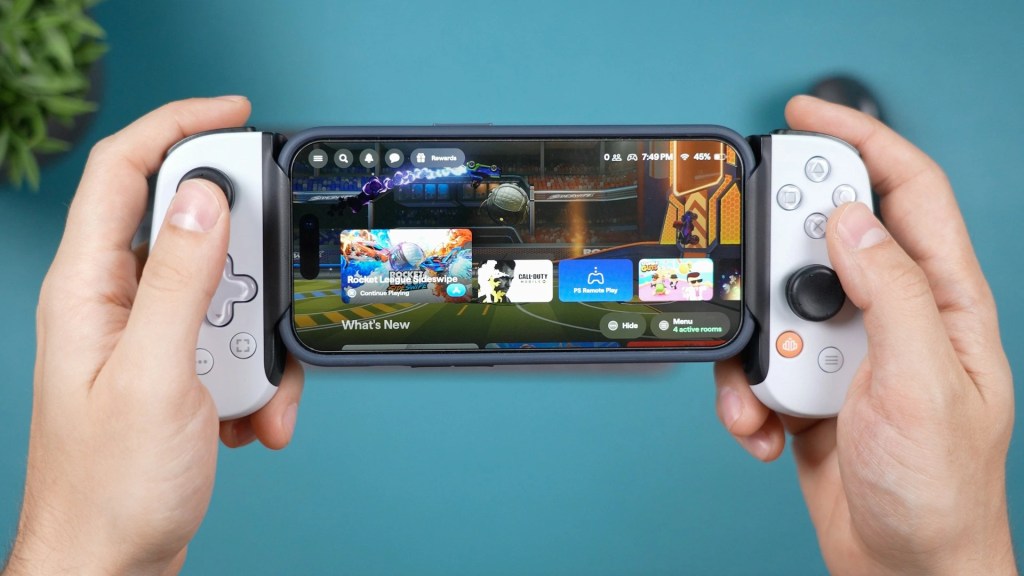
Apple has spent over a year quietly building its own game controllers, and the twist nobody saw coming is that they might not say “Apple” on them at all. Bloomberg’s Mark Gurman confirmed on September 13 that the project is real, corroborating code references that MacRumors readers had already spotted buried inside a macOS 26.7 beta. Apple already sells third-party gamepads like the Backbone One and SteelSeries Nimbus+ through its online store, but this time the company wants a direct cut of the iPhone gaming accessory market instead of just hosting other brands.
I’ve been following Apple’s gaming ambitions for a while, and honestly, the branding angle here is the part that caught me off guard. Most leaks assume a new Apple product gets an Apple logo stamped on it. This one might not.
What the Leaked Game Controllers Code Actually Revealed
The first release candidate of macOS 26.7 quietly shipped with full support for two unreleased devices, internally labeled T6502 and T1057. This wasn’t hidden behind some internal developer flag either. The code exposed real customer-facing support, including haptic feedback systems, input recognition, and sensor handling. Apple pulled the entire stack out by the second release candidate, which is usually a sign that a leak happened before the company wanted it to.
Both devices register themselves to the Game Controller framework as “Made For iPhone” extended gamepads, and both carry Apple’s own vendor ID. What nobody talked about at first is that T1057 can actually identify itself three different ways: as an Apple USB device, an Apple Bluetooth device, or a Beats USB device. That single detail is basically the whole story in miniature. Apple built the hardware, but it hasn’t decided how loudly to put its own name on it.
Why Beats and Not Apple
Here’s what’s interesting about the branding choice. Gurman reported that Beats executives are the ones actually leading the project’s conception and engineering, not Apple’s core hardware teams. “Apple sees this as a growing market and wants in,” he wrote in his Power On newsletter. Using Beats lets Apple experiment with cheaper materials, bolder colors, and a more playful design language without touching the premium image that its main product lineup depends on.
I actually think this is the smarter move for Apple here. Beats already sells things like an $18.99 woven USB-C cable and various iPhone cases, so it’s become something of a testing ground for products that don’t quite fit the polished Apple aesthetic. A gaming controller, with its need for grippy textures and flashy colors, fits that lane a lot better than it would fit next to a MacBook.
T6502 and T1057 Are Not the Same Controller
The more I looked at this, the more it became clear that the real story isn’t just “Apple is making a controller.” It’s that Apple appears to be making two very different ones for two very different buyers. T6502 leans wired and straightforward, with a D-pad, thumbsticks, shoulder buttons, and haptic motors that are split into left and right zones. T1057 goes further, adding Bluetooth connectivity, motion sensors across all three axes, and a single addressable haptic actuator instead of two separate ones.
That split suggests Apple isn’t just chasing one product. It looks more like a tiered lineup, maybe a cheaper wired option alongside a more premium wireless one with motion controls for racing games or anything that benefits from tilt input. Industry insiders hint that this dual approach mirrors what Sony and Microsoft already do with their own first-party and budget controller lines.
Apple Has Tried This Before and Backed Off
This isn’t Apple’s first flirtation with making its own gamepad, and that’s exactly why some longtime Apple watchers are treating this report with a healthy amount of caution. Back in 2013, developers reported that Apple was quietly meeting with them at the Game Developers Conference under a fake company name to discuss a mysterious controller. Patents surfaced years later showing Joy-Con-style designs that would clip onto either side of an iPhone, plus a Nintendo DS-style version with its own display. None of it ever shipped.
If the current trajectory holds, this time feels different mainly because of how far the software groundwork has already come. iOS 26 introduced a dedicated Games app that pulls Apple Arcade, Game Center, and your entire game library into one hub across iPhone, iPad, Mac, and Apple TV. Apple Arcade itself has quietly grown past 250 titles for $6.99 a month, a number that gets buried under all the iPhone headlines but says a lot about how seriously Apple now treats gaming as a business.
What This Means for iPhone Gaming Going Forward
When I first heard about this, I didn’t think much of it, but after digging in, I changed my mind completely. A first-party or Beats-branded controller backed by the Games app infrastructure could finally give iPhone gaming the kind of console-adjacent identity it’s never really had. Third-party accessories like the Backbone One have proven there’s real demand, and Apple watching that market grow for years without officially entering it always felt like an odd gap for a company that controls the entire platform.
No pricing or release window has leaked yet, and Apple hasn’t confirmed any of this publicly. Sources suggest the controllers could still be a year or more away from an actual announcement given how development timelines have played out before. Still, the fact that working code made it into a public beta build, even briefly, tells you this has moved well past the concept stage.
Whether these end up wearing an Apple logo, a Beats logo, or something else entirely, the direction is pretty clear. Apple wants a real seat at the table in the game controllers market. has spent years quietly supporting from the sidelines, and 2026 looks like the year that finally starts to show.


