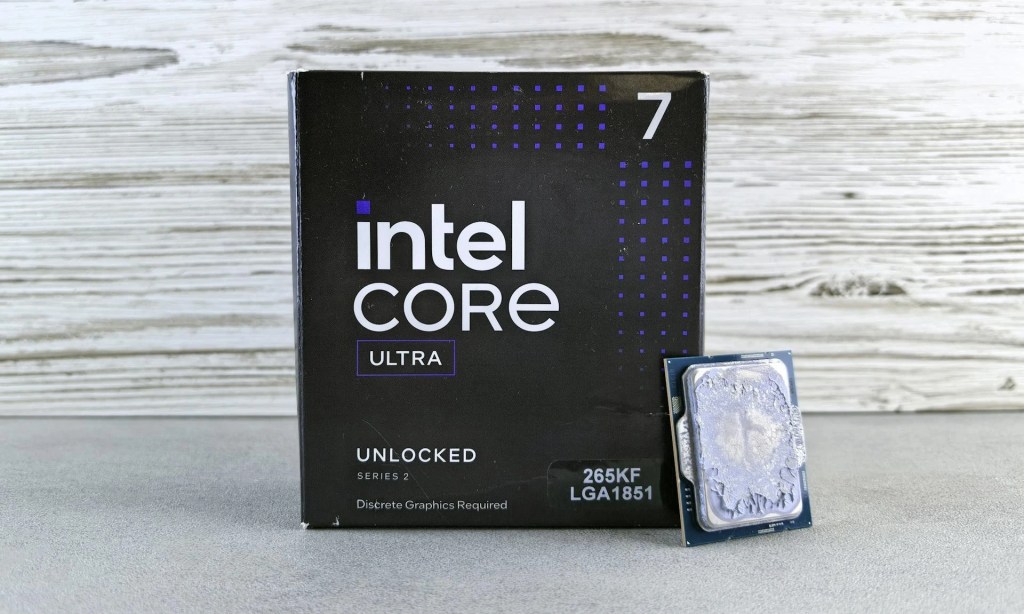
Intel was once the undisputed king of the semiconductor world. For over a decade, it slipped. It missed the mobile wave, fumbled the AI transition, and watched AMD eat its market share while TSMC left it behind in manufacturing technology. But something has shifted in a very real way. Intel’s stock has surged a stunning 490% over the past year, Apple has reportedly signed a preliminary chip-making deal, and Nvidia made a $5 billion investment in the company. If you have been dismissing Intel as a company in permanent decline, 2025 and 2026 are asking you to think again.
1. The Intel Comeback Starts With a New CEO
When Intel’s board forced out longtime CEO Pat Gelsinger at the end of 2024, the company needed someone who could make hard decisions without hesitation. Lip-Bu Tan took over in March 2025 with a clear mandate: streamline management and rebuild an engineering-driven culture. Within weeks, he made his priorities clear.
Intel sold 51% of its Altera semiconductor business to private equity firm Silver Lake. It spun off its Network and Edge group. It cancelled factory projects in Germany and Poland that were draining cash without returns. “Our goal is to reduce inefficiencies and redundancies and increase accountability at every level of the company,” Tan said on the Q2 earnings call.
The restructuring came with real pain. Intel went from 99,500 employees at the start of 2025 down to a target of 75,000 by the end of the year, a reduction of tens of thousands of jobs. Whether you agree with the approach or not, the direction was clear. Intel was no longer pretending it could sustain its old size while rebuilding from the inside.
2. The 18A Breakthrough: Intel’s Comeback Weapon
The Intel comeback story lives or dies on one thing: its 18A manufacturing process. 18A is roughly equivalent to 1.8 nanometers, putting it on the same level as the most advanced process available at TSMC in Taiwan. What makes 18A remarkable is that it combines two major innovations at once: RibbonFET gate-all-around transistors and PowerVia, a backside power delivery network.
For a long time, the yields were a disaster. Reuters reported in August 2025 that 18A was still producing low yields and high defect rates, with one source calling Intel’s timeline a hail mary.
I’ve been following this for a while, and honestly, watching Intel claw its way through the 18A yield crisis in real time has been one of the most dramatic stories in tech this decade. Then came CES 2026. Intel unveiled the Core Ultra Series 3 lineup, codenamed Panther Lake, the first client processor built on the 18A node, and CEO Lip-Bu Tan confirmed the company was ahead of schedule on production ramp.
Over 200 laptop designs from major OEMs were already in development. Panther Lake delivers a claimed 76% faster gaming performance over previous generations, with top-tier X-series chips featuring a 12-core Arc B390 GPU that can rival a discrete Nvidia RTX 4050. That was something nobody outside Intel expected.
3. Nvidia, Apple, and the US Government All Bet on Intel
What most articles missed is just how many powerful players placed big bets on Intel inside a single 12-month window. In September 2025, Nvidia agreed to buy a $5 billion stake in Intel as part of a broader deal to develop multiple generations of data center and PC products together, including x86 SoCs that incorporate Nvidia RTX GPU chiplets. At the same time, the federal government invested $8.9 billion in Intel, making it one of Intel’s largest shareholders, with conditions requiring it to maintain foundry operations.
Then came the headline that landed just this week: Apple and Intel reportedly reached a preliminary deal for Intel to manufacture some of the chips that power Apple’s devices, per The Wall Street Journal. After looking into this more closely, I can tell you this deal alone changes the entire narrative around Intel’s foundry business.
Apple has relied entirely on TSMC for years. Even exploratory movement toward Intel signals genuine confidence in its manufacturing process. And Elon Musk confirmed that Tesla plans to use Intel’s next-generation 14A process to produce chips at the Terafab project, an advanced AI chip complex being built in Austin.
4. The Intel Comeback Hits the Financial Numbers
This is one of those things I genuinely got excited about the moment I saw the numbers. Intel’s Q3 2025 earnings report showed revenue growing to $13.7 billion, with net income of $4.1 billion — a steep reversal from the $16.6 billion loss it had reported in the same period a year earlier. Intel added $20 billion to its balance sheet during that quarter alone. The company’s stock had its best month ever in April 2026, more than doubling in value as the Tesla and Apple partnership news gained momentum.
TechCrunch noted that the 490% stock rise may be running well ahead of the company’s actual turnaround, and that is a fair point. Intel’s chip yields still need to prove themselves at volume. The desktop CPU market, which Tan himself admitted Intel “fumbled,” still needs serious work. But the direction of travel is undeniable.
5. What Comes Next for the Intel Comeback
The more I looked at this story, the more it became clear that the real narrative is not just about chips. It is about whether the US can sustain a world-class semiconductor manufacturing industry without depending entirely on TSMC.
Intel is the only US-based company with a credible shot at cutting-edge chip fabrication, and powerful forces are aligned to make sure it does not fail.Nova Lake, Intel’s next-generation consumer chip family, is planned for a 2026 release alongside the continued Panther Lake ramp, giving the 18A node two major product lines to prove its scalability.
Intel also announced plans to enter the GPU market, a space dominated by Nvidia, with a new initiative overseen by newly hired engineers in its data center group. Sources suggest that both Nvidia and Apple are considering Intel’s 14A process for future products.
Analyst Jeff Pu predicts that Apple’s M-series chips and Nvidia’s lower-end gaming GPUs could both adopt 14A. Intel CEO Tan has confirmed that 14A will be in volume production by 2029. If that timeline holds, this Intel comeback will be remembered as one of the most remarkable reversals in the history of the technology industry.


