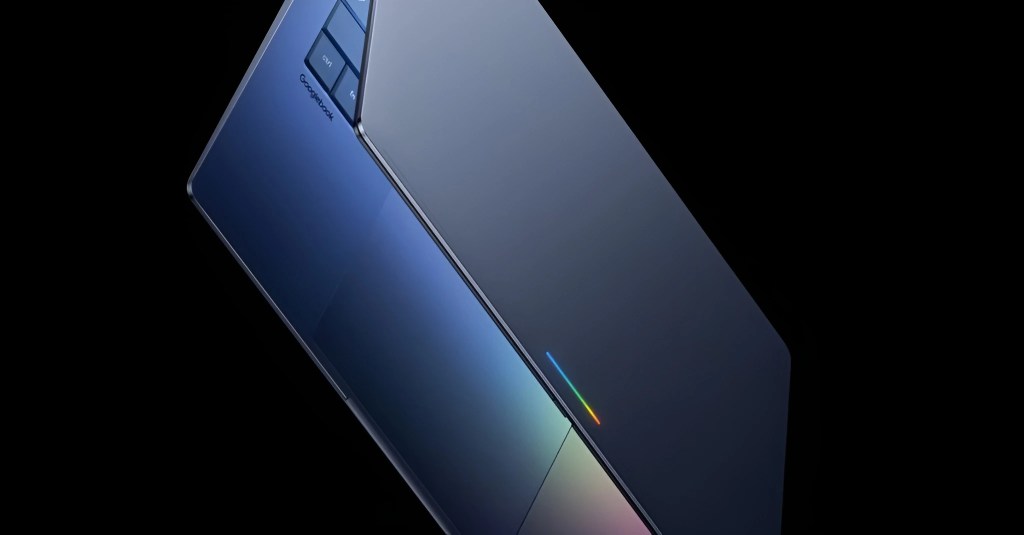
The rumor mill has been building around Google’s laptop plans for months, and on May 12, 2026, it all finally paid off. Google officially unveiled the Googlebook at The Android Show: I/O Edition, a brand-new category of AI-native laptops built from the ground up around Gemini Intelligence.
But here’s the thing: even after the big reveal, there’s a surprising amount we still don’t know. Pricing is completely unconfirmed. The operating system doesn’t have an official name yet. Exact hardware specs remain vague. And the tech community? Already divided.
I’ve been following this story since the earliest leaks of something internally codenamed “Aluminum OS” back in late 2025, and honestly, the closer we get to launch, the more interesting it becomes.
What the Leaks Got Right Before the Announcement
Long before Google took the stage, leakers had been assembling the puzzle. Back in January 2026, the first real look at what would become GoogleBooks surfaced when 9to5Google reported on two accidental screen recordings that leaked through a Chromium bug report, captured on an HP Elite Dragonfly 13.5. The interface showed an Android-style taskbar, virtual desktop support, and Quick Settings panels. Tom’s Hardware covered those images and noted the platform looked like “the aesthetic and functional lovechild of Chrome OS and Android 16.”
Then, just hours before the official announcement, leaker Mystic Leaks dropped something far bigger: a full 16-minute hands-on video of Aluminum OS running through the UTM emulator on a MacBook Pro. As Android Headlines covered it, the footage showed a bottom app dock, a Google Search bar, and a folder of Google apps front and center on the home screen. It’s clearly Android at its core.
But here’s what most articles completely missed about that leak. The Mystic Leaks footage showed a “Link to iOS” app built right into the operating system. Google hasn’t said a single word about iOS connectivity publicly. If that feature ships at launch, it’s potentially bigger than anything else Googlebook announced on stage.
What We Know About the Googlebook
The confirmed features are genuinely impressive, even if the full picture is still missing. According to TechCrunch’s coverage of the announcement, Google unveiled four headline capabilities built into the platform.
The Magic Pointer is the most talked-about. Developed in collaboration with the Google DeepMind team, it transforms the traditional cursor into something context-aware. Wiggle it over a date in an email, and it suggests a calendar invite. Select two images side by side, and it visualizes them together. It’s subtle. But as Alexander Kuscher, Google’s Senior Director of Android Tablets and Laptops, described it: the feature is “built in, but not in your face.”
Create Your Widget is honestly the one that got me most excited when I first read about it. You prompt Gemini, it pulls from Gmail, Calendar, and the open web, and builds a personalized dashboard widget on the fly. Flight details, restaurant reservations, a countdown to an event: all in one block, assembled by AI, on demand. For people deep in Google’s ecosystem, that removes real friction from daily life. And it’s not hypothetical. It’s shipping this fall.
Quick Access and Cast My Apps complete the four pillars. Quick Access lets you browse and insert files from your Android phone directly in the Googlebook’s file browser without transferring anything first. Cast My Apps mirrors Android phone apps to the laptop screen entirely. As Bloomberg reported through Advisor Perspectives, this is Google’s own answer to Apple’s iPhone Mirroring feature, and it’s coming built in at launch.
Every Googlebook will also carry one consistent design signature: the Glowbar, an illuminated strip on the outside of the display lid. Google calls it, per The Gadgeteer’s coverage, “a statement that is both functional and beautiful.” What it actually does beyond looking distinctive hasn’t been explained.
The Chip Story Nobody Has Fully Answered
This is where things get genuinely interesting. As Android Authority reported, Google VP John Maletis confirmed in a Chrome Unboxed interview that Googlebook will support chips from Intel, Qualcomm, and MediaTek. AMD is notably absent from the first wave, at least for now.
Notebookcheck pointed to Intel’s upcoming Core Series 3 “Wildcat Lake” processors as the likely silicon for mainstream Googlebook models. Wildcat Lake is a low-TDP chip with up to six cores and Xe3 integrated graphics, designed for thin ultrabooks. That lines up with Google’s “premium but everyday” positioning. But Intel’s involvement raises a deeper question.
Tom’s Hardware noted that Intel has an ARM-based SoC in development under the Deer Creek Falls codename, manufactured on Intel’s 18A node. If Googlebook’s Intel hardware ends up being ARM-based, that would make it one of the first commercial deployments of that chip, and a direct shot at Apple’s M-series efficiency story.
Qualcomm and MediaTek handle the ARM side more straightforwardly, with Snapdragon X-series and Kompanio lineup processors already proven in Chromebook hardware. The multi-vendor approach, as VideoCardz noted, means Googlebook could span both x86 and ARM designs across different price tiers.
The Samsung Silence and the Pixel Googlebook Question
After digging into this more closely, I can tell you the two most telling things about the Googlebook announcement aren’t what was said. They’re what wasn’t.
Samsung, Google’s most important Android partner in the hardware space, was not in the initial five-partner lineup. As 9to5Google highlighted, supply chain leaks had previously suggested Samsung was working on an Android-based Galaxy Book running One UI 9. But they weren’t on stage. Thurrott.com’s analysis speculated this likely isn’t a falling-out, suggesting Samsung will probably reveal something closer to CES 2027, giving more time to refine Galaxy AI integration with the new platform. That reads as reasonable to me. But it’s a gap worth watching.
Then there’s the question of a Google-branded Googlebook. The company hasn’t released its own laptop since the Pixelbook Go in 2019. When asked directly whether a first-party device is coming, Sameer Samat, Google’s president overseeing Android, declined to comment. Not a denial.
Over in the Hacker News community thread covering the announcement, one widely-shared comment summed up a broader concern: “On paper, this sounds amazing. Like out-of-sci-fi-books amazing. The caveat? I very much doubt Google has the capacity to execute this properly.” And over at MacRumors, readers were raising data privacy flags, with multiple commenters questioning whether user activity on a Gemini-first platform would feed back into training data.
Those are real tensions Google will need to address before the fall.
My Take: Where This Is Actually Heading
Here are my predictions, based on everything that’s surfaced so far.
I’m fairly confident the Googlebook will launch starting at around $599 to $699. Google’s “premium” language and OEM partner list suggest they’re not targeting the Chromebook price floor. But Apple’s MacBook Neo at $599 makes anything significantly above that a harder sell for everyday consumers.
I think the official OS name will be revealed at Google I/O on May 19. “Aluminum OS” was always a codename, and Google confirmed it’s not sticking. Something clean like “Google OS” or an Android-branded name seems most likely. It won’t be a surprise; it’ll just be official.
I’m almost certain Samsung will enter the Googlebook ecosystem by mid-2027. The partnership between Google and Samsung is too strategically important for Samsung to stay on the sidelines for long.
And this is the long shot: I believe a first-party Pixel Googlebook is coming before the end of 2026. Google hasn’t made a flagship laptop in seven years, and the Googlebook announcement is too big a platform moment for the Pixel team to stay quiet. They didn’t comment. But they didn’t say no either.
Nothing about Googlebook is confirmed yet beyond what was revealed on May 12. Google I/O on May 19 is the next place to watch for pricing, the OS name, and hardware details. Until then, the Googlebook is the most exciting and most unknown laptop story of 2026, and that combination is worth paying very close attention to.


