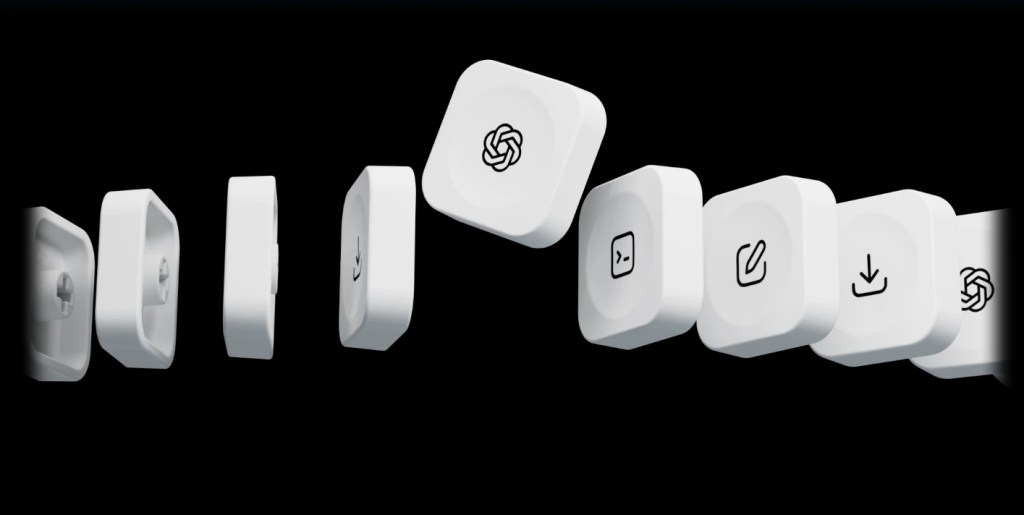
OpenAI just shipped its first branded hardware product, and it’s not the screen-free companion device everyone has been talking about since the Jony Ive rumors started swirling. It’s a $230 macro pad called the Codex Micro, built in partnership with a boutique keyboard maker most casual tech readers have never heard of. I’ve been following the OpenAI hardware story for months, and honestly, this is not the launch I expected to come first.
The Codex Micro is designed to sit next to your regular keyboard as a physical command center for Codex, OpenAI’s agentic coding platform. Instead of tabbing between browser windows to check whether your AI agent finished a task, the device gives you six illuminated keys that show live status: idle, thinking, done, or errored out. It sounds like a small thing until you realize how much time developers currently waste alt tabbing between five different agent windows just to see who’s still working.
What the Codex Micro Actually Does
OpenAI built the Codex Micro with Work Louder, a Montreal-based keyboard company known for compact mechanical macro pads. This isn’t a from-scratch hardware project. The device is a reskinned version of Work Louder’s existing Creator Micro 2 chassis, the same board the company previously customized for Figma and Framer. That matters because it tells you exactly how OpenAI is approaching hardware right now: low risk, low volume, and someone else handling manufacturing.
The pad itself has 13 low-profile mechanical switches, a rotary dial, a small joystick, and a capacitive touch sensor for cycling through programmable layers. Buyers get to choose between clicky and silent switches, and it connects over USB-C or Bluetooth. What I find interesting here is that six of those keys are dedicated “Agent Keys” with shine-through keycaps that change color depending on what your Codex agent is doing at any given moment.
A single tap on an agent key selects the agent tied to it. A double tap brings that agent’s window to the front. White means idle, blue means thinking, green means finished, and red flags an error. If you’re juggling three or four agents on different tasks throughout the day, that’s a genuinely useful shortcut, and it’s the kind of detail that shows OpenAI actually thought about how developers work rather than just slapping a logo on existing hardware.
The Reasoning Dial Is the Feature Nobody Expected
Here’s the part of the story that most people are sleeping on. The Codex Micro includes a rotary dial that adjusts how much “reasoning” an agent applies to a given task, essentially controlling how much time and compute it burns before responding. Turn it down for quick fixes and turn it up when you want the agent to actually sit and think through something complex.
I didn’t expect this angle when I first read about the launch, and that’s exactly why it matters. It turns an abstract backend setting into something you physically feel yourself adjusting, which is a strange and kind of clever way to make a compute tradeoff tangible.
The joystick handles workflow shortcuts too. A flick can trigger things like reviewing a pull request, debugging an error, or kicking off a refactor, all without typing a prompt from scratch. Everything is remappable through Work Louder’s Input app and through Codex itself, so the keys aren’t permanently locked to a single function.
According to reporting from Axios and TechCrunch, OpenAI is treating this as a limited-run collaboration rather than a mass-market product. An OpenAI spokesperson told TechCrunch that the Micro is meant to “supercharge” Codex usage, which is a pretty clear signal that this is aimed squarely at power users, not casual ChatGPT subscribers.
Not the Jony Ive Device, and Timing That Raises Eyebrows
It’s worth being clear about what the Codex Micro is not. OpenAI has a separate, much bigger hardware bet in the works with former Apple design chief Jony Ive: a portable, screenless smart speaker reportedly involving parts that move on their own. That device is expected sometime in 2027, and it’s a completely different category of product built for consumers rather than developers.
The timing of the Codex Micro launch is what makes this story more complicated than a simple product drop. Apple recently sued OpenAI, alleging its leadership pursued a deliberate strategy to extract confidential hardware information and used it while developing its own device. OpenAI has denied the allegations.
Sources suggest the IV branded speaker is being partly designed by former Apple engineers, which hasn’t gone unnoticed given the ongoing legal fight. Industry insiders hint that Apple’s lawsuit could end up delaying the bigger consumer hardware push, even as OpenAI ships smaller accessories like the Micro in the meantime.
Codex itself has grown fast enough to justify a dedicated peripheral. Reports place weekly active users somewhere between five and eight million as of mid-2026, up from under a million when the desktop app first launched back in February. That’s a buried stat that a lot of coverage glossed over, and it’s the real reason a niche $230 keyboard makes any business sense at all.
How Developers Are Actually Reacting
Reaction from the developer crowd has been split, and honestly, that’s not surprising for a product like this. Commentary on Slashdot leaned skeptical, with people pointing out that a regular keyboard already does the job for a fraction of the price. Hacker News threads were more amused than outraged, treating it as a curiosity rather than something to get worked up about. I’ve seen enough of these boutique keyboard collaborations to know the appeal isn’t really about raw functionality. It’s closer to buying merchandise for people who already treat their desk setup as a personality trait.
If the current trajectory holds, this probably isn’t the last accessory OpenAI puts its name on. There are already whispers about smart glasses and other wearables in early supplier conversations, though none of that is confirmed. What is confirmed is that OpenAI now has a genuine physical foothold in the market, and the Codex Micro, however niche, is the opening move.


