Nokia history is not just a story about mobile phones—it is one of the most studied corporate collapses in modern business, and for good reason. At its peak, Nokia was responsible for nearly half of all mobile phones sold on the planet. It was a brand that transcended language, income level, and geography. From the streets of Lagos to the suburbs of Tokyo, owning a Nokia was a universal experience shared by billions. Yet within the span of just a few years, that empire crumbled—and understanding exactly why it happened tells you more about the tech industry than almost any other story.
From Paper Mills to Pocket-Sized Phones
Most people are genuinely surprised when they learn that Nokia started life as a wood pulp mill in 1865, founded by mining engineer Fredrik Idestam along the banks of the Nokianvirta River in Finland. The company spent its early decades producing paper, rubber goods, and cables — products with almost nothing in common with the sleek mobile devices that would define Nokia a century later. What made the difference was Nokia’s deep experience in cable manufacturing, which quietly positioned it to move into telecommunications when the opportunity arrived.
By the 1960s, three Finnish companies — Nokia Ab, Finnish Rubber Works, and Finnish Cable Works — had merged into a single diversified corporation. The resulting entity was selling everything from car tires to televisions before it made its first serious move into mobile communications with the Mobira Senator car phone in 1982. The device weighed close to ten kilograms and was only accessible to a narrow slice of the population, but it marked the moment Nokia made a deliberate bet on the future of wireless communication—a bet that would pay off spectacularly.
The Golden Era: How Nokia Reached 49% Market Share in Nokia history
By the 1990s, Nokia had undergone one of the most dramatic corporate transformations in modern history. Under CEO Jorma Ollila, the company divested its non-core businesses and focused exclusively on telecommunications. The results were staggering. Nokia’s operating income grew from roughly $1 billion in 1995 to approximately $4 billion by 1999, driven by an exploding global appetite for mobile phones. I’ve been following this story for a while, and honestly, the speed of that transformation still catches me off guard every time I look at the numbers.
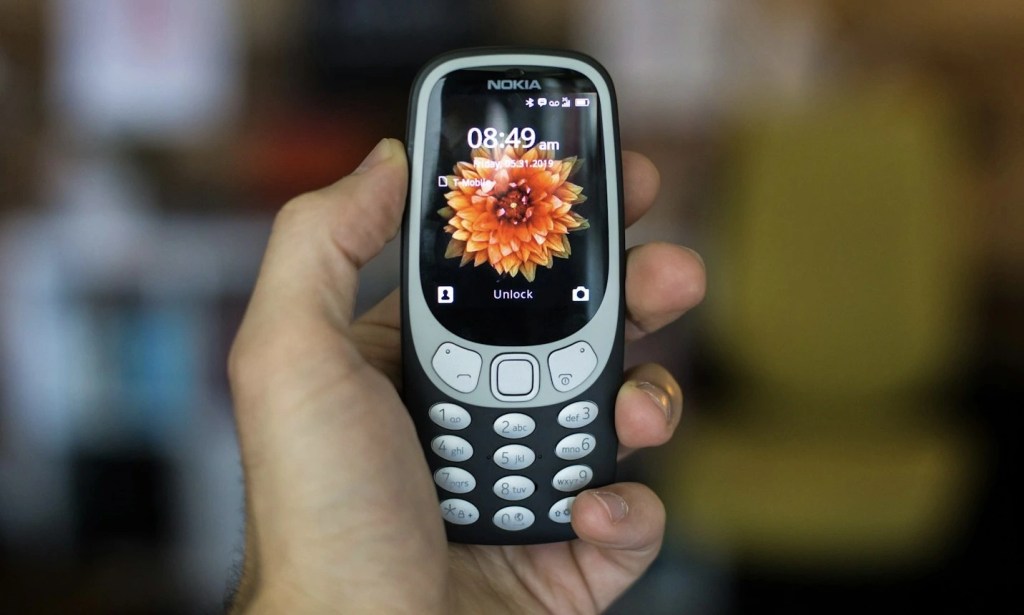
Nokia did not just build phones — it built phones people genuinely loved. The Nokia 3310, with its customizable covers and near-mythic durability, became a cultural artifact. The Nokia 1100, released in 2003, sold over 250 million units globally and became one of the best-selling consumer electronics products ever made. That number is rarely cited in mainstream tech coverage today, which is exactly why it deserves attention: at the height of its power, Nokia was not just competing—it was in a category of its own.
By 2007, Nokia’s market share stood at a dominant 49.4% of the entire global mobile phone market. What most articles missed about this era is just how systematically Nokia had engineered this dominance across income brackets. Whether you were a student in rural India or a business executive in London, Nokia had a device designed specifically for your needs and your budget. That kind of market segmentation is extraordinarily difficult to execute at scale, and Nokia pulled it off for years.
Nokia’s First Smartphone: A Fact Most People Overlook
Here is the part of Nokia’s story that genuinely surprised me when I first dug into it. Nokia launched what many technology historians consider the world’s first true smartphone—the Nokia Communicator—back in 1996. This was more than a decade before the iPhone arrived. The Communicator had a full keyboard, email functionality, and a web browser in an era when most people had never heard the word “smartphone.” Nokia was not just ahead of the curve — it was practically drawing the curve for everyone else to follow.
After looking into this more closely, I can tell you that this detail fundamentally changes the way you read Nokia’s eventual downfall. This was not a company that failed to see the future. Nokia saw it clearly and got there early. The tragedy is that it could not hold onto the advantage it had built.
The 5 Real Reasons Nokia Lost Everything
1. Bureaucracy that killed innovation from the inside. As Nokia scaled into a global corporation, middle management layers began filtering out bold ideas before they could reach leadership. Internal competition between departments replaced collaboration, and engineers with genuinely forward-thinking proposals found themselves blocked by a system optimized for short-term performance targets rather than long-term product vision.
2. A fatal dependence on Symbian. Nokia’s Symbian operating system had been powerful for its time, but it was architecturally not designed for the touchscreen-first, app-heavy environment that smartphones were evolving into. Developers found it deeply frustrating to build on. Consumers found it clunky compared to iOS. And Nokia found it nearly impossible to overhaul at the pace the market demanded.
3. The iPhone arrived and exposed every weakness at once. In 2007, Apple launched the original iPhone — a full touchscreen device with a proper mobile browser and an intuitive operating system that made existing smartphones feel obsolete overnight. Nokia’s leadership was initially dismissive. That dismissiveness cost years of critical response time. When I first heard about how Nokia’s internal teams reportedly described the iPhone as “not a real threat,” I didn’t believe it, but internal accounts from former Nokia engineers have confirmed that the cultural confidence inside the company was actively working against it.
4. Choosing Windows Phone over Android. In 2011, Nokia made the decision to partner with Microsoft and adopt Windows Phone instead of embracing Android. Industry insiders widely regard this as the single most consequential strategic error Nokia made. Android was already gaining massive global momentum and building one of the most vibrant developer ecosystems in software history. Windows Phone, despite Microsoft’s resources, never achieved meaningful market traction. Nokia had essentially chosen the losing side of a war that was already well underway.
5. A weak position in North America. Nokia had always struggled to establish deep market penetration in the United States. American carriers preferred to customize and control the devices they sold, and Nokia’s relatively rigid approach to software and partnerships made these relationships difficult. When the smartphone revolution accelerated, Nokia had no strong North American base to anchor its global comeback attempt.
What Happened After the Fall
By April 2012, Samsung had overtaken Nokia as the world’s top phone manufacturer—ending a streak that had lasted over a decade. In 2013, Nokia sold its Device and Services division to Microsoft for €5.4 billion, marking the symbolic end of the mobile phone empire. Microsoft later wrote down nearly the entire value of that acquisition, confirming just how far the brand had fallen.
Sources suggest that Nokia’s infrastructure business — which focuses on 5G networks and industrial digitalization — has quietly become one of the most important players in global telecommunications behind the scenes. Many industry analysts believe Nokia’s B2B pivot could position it as a long-term winner in the 5G infrastructure race, even if the consumer brand never recovers. HMD Global continues to sell phones under the Nokia name, and according to reports, the company has been exploring ways to reposition Nokia devices for specific market segments rather than chasing mass-market competition directly.
Nokia history is ultimately a lesson about what happens when a company’s internal culture cannot keep pace with external change. The technology industry moves faster than almost any other sector, and the price of standing still — even for a few years — can be total displacement. Nokia once gave billions of people their first mobile phone. That achievement is real and remarkable. But in the world of technology, past greatness does not protect you from the future.


