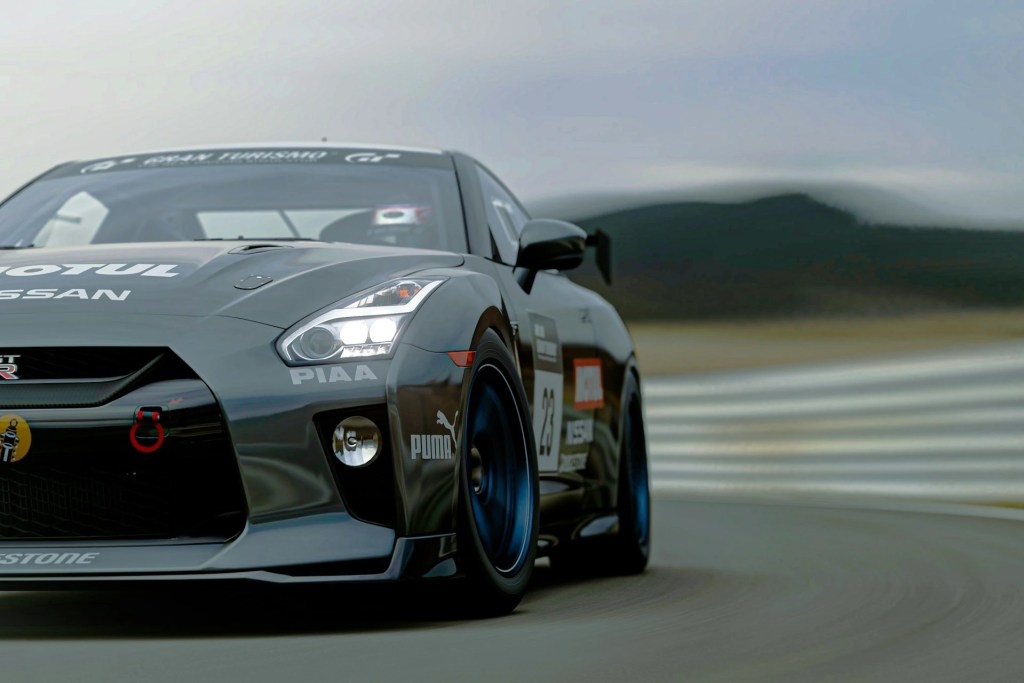
The last R35 Nissan GT-R rolled off the production line in August 2025, ending an 18-year run that redefined Japanese performance cars forever. For months after, fans held their breath in silence — no hints, no teasers, no official word on whether Godzilla would ever return. Then, at the 2026 New York International Auto Show, everything changed.
Nissan North America’s Senior Vice President and Chief Planning Officer, Ponz Pandikuthira, stepped forward and confirmed what enthusiasts had been desperately hoping to hear: the Nissan GT-R R36 is actively in development, and it’s arriving before 2030. What most articles missed, however, is that the confirmation didn’t just happen once — it happened twice, at two different locations, by two different executives in the same week.
The R36 isn’t just a revival. Based on everything confirmed so far, it’s shaping up to be the most technically ambitious GT-R Nissan has ever attempted—and the decisions being made right now will define the car’s legacy for the next two decades.
The Nissan GT-R R36 Is Officially Confirmed
When Ponz Pandikuthira told The Drive at the 2026 New York Auto Show, “I’d say by 2028 you’ll see some concrete announcements, and hopefully before the decade turns you’ll see an R36 GT-R,” it was the clearest signal the GT-R community had received in years. But what gave that statement even greater weight was what happened shortly after in Yokohama. Nissan CEO Ivan Espinosa personally confirmed to Motor1 that the new GT-R is already in the works, describing it as “an icon of a company, but more so an icon of the industry.” The fact that this came directly from the CEO — the sole person who can officially greenlight a new R36 — removes any remaining doubt.
I’ve been following this for a while, and honestly, hearing confirmation from both the planning chief and the CEO in the same week felt like a genuine watershed moment for GT-R fans everywhere. This is no longer a rumor, a leak, or a hopeful analyst prediction. It’s a double-confirmed, fully official development program with a clear roadmap: meaningful announcements expected around 2028, with the car arriving at dealerships before the decade is over.
It’s a hybrid, not an EV—and that’s the right decision.
One of the biggest fears in the GT-R community was the possibility of a fully electric successor. An electric Godzilla, while technically feasible, felt wrong in all the ways that matter most to enthusiasts. Thankfully, that fear has been put to rest. The Nissan GT-R R36 will be a hybrid — not a full EV — built around a heavily modified version of the beloved VR38 twin-turbo V6 block from the R35. Pandikuthira explained the reasoning with remarkable clarity during his interview with The Drive: “If there were a hybrid powertrain, the block of that VR38 engine is so great. Why would you throw that away? But maybe the heads are very different. Maybe the pistons are very different.”
What this means in practice is that while the VR38 block itself survives, almost everything around it will be redesigned from the ground up — new cylinder heads, new pistons, new combustion methods, and electric motors integrated into the drivetrain. Pandikuthira confirmed that the “powertrain’s going to be mostly new,” while also emphasizing that the R36 needs “some level of electrification” to pass strict upcoming Euro 7 emissions standards and remain a genuine global car. In my opinion, this is exactly the right approach — the hybrid route preserves the mechanical soul of the GT-R while giving Nissan the performance ceiling and regulatory headroom it needs to compete at the highest level through the 2030s.
A Brand-New Chassis and a Completely Fresh Machine
The Nissan GT-R R36 will not be a facelift or a platform update. Pandikuthira made this absolutely clear at the New York Auto Show: the R36 “has to be” on a new chassis, and “it’s going to be an all-new car.” This signals a genuine, full-scale engineering effort from the ground up—a level of commitment that goes far beyond what many expected from a company that has faced well-documented financial headwinds over the past several years.
After looking into this more closely, I can tell you that the chassis decision is arguably the most important one Nissan has made for the GT-R program in over a decade. The R35’s platform was a masterpiece in its time, but it was engineered in 2007 and has been stretched to its structural and aerodynamic limits. A new platform means modern suspension geometry, genuinely improved rigidity, a new AWD system with advanced torque vectoring, and an upgraded transmission—almost certainly with more gears than the R35’s six-speed dual-clutch.
BorgWarner supplied the outgoing GR6 transaxle, but reports suggest Nissan is evaluating alternatives, including Tremec’s dual-clutch setup, for the next generation. Beyond the drivetrain, expect a completely new interior with modern infotainment and updated driver assistance tech — while still staying true to the driver-first philosophy that made the R35 iconic.
The GT-R R36 Has a Fierce Rival Already Waiting
Here’s the part of this story that most people are sleeping on: by the time the Nissan GT-R R36 arrives, the competition won’t be the same landscape the R35 faced. The new hybrid Chevrolet Corvette Grand Sport X—essentially the spiritual successor to the E-Ray—already produces 721 horsepower and 665 pound-feet of torque. That is the benchmark Nissan’s engineering team will need to clear to make a credible statement. Industry insiders hint that Nissan is targeting a similar or higher power output for the R36, with the hybrid system providing instant torque fills between combustion power bands that could make the car feel significantly quicker in real-world driving than raw horsepower numbers alone suggest.
I didn’t expect this angle when I started researching—and that’s exactly why it matters. The R36 isn’t arriving into a comfortable performance segment where a well-known name carries the car on brand legacy alone. It’s walking into a fight where the bar has already been raised, and that pressure will likely push Nissan to produce something genuinely extraordinary. Pandikuthira deliberately invoked the Nürburgring during his interview—the same circuit where the R35 was honed into a lap-record machine—signaling that the R36 is being built with that exact same uncompromising, track-first DNA.
The GT-R R36 Could Mark the Start of a Broader Nissan Revival
The most forward-looking angle in this entire story isn’t just about the Nissan GT-R R36 itself—it’s about what its development signals for Nissan’s wider direction. Sources suggest that Nissan is seriously evaluating a more affordable sports car positioned below the Z, potentially reviving the iconic Silvia nameplate. CEO Ivan Espinosa hinted at this possibility directly, noting it’s something he’d personally like to see happen. Taken together with the R36 confirmation, Nissan appears to be making a deliberate strategic shift: using performance cars to rebuild its brand identity after a difficult few years of restructuring and falling global sales.
When I first heard about the Silvia revival rumors, I dismissed them as fan wishful thinking. But hearing the CEO echo the idea in the same breath as the GT-R confirmation changed my perspective completely. According to reports, the renewed investment in performance vehicles is being driven not just by market demand but by internal enthusiasm—a core group of enthusiasts within Nissan in Japan who have been quietly championing the next-generation GT-R program for years. These are the people now building the Nissan GT-R R36, and their commitment to keeping Godzilla a true driver’s car gives every reason to believe the end result will be worth the wait.
The R36 is coming. It’s going to be a hybrid; it’s going to be built on a new platform; it’s going to be engineered around the Nürburgring; and it’s going to arrive before 2030. For the first time in years, Nissan has a flagship performance car program that feels genuinely exciting — and the automotive world will be watching every step of the way.


