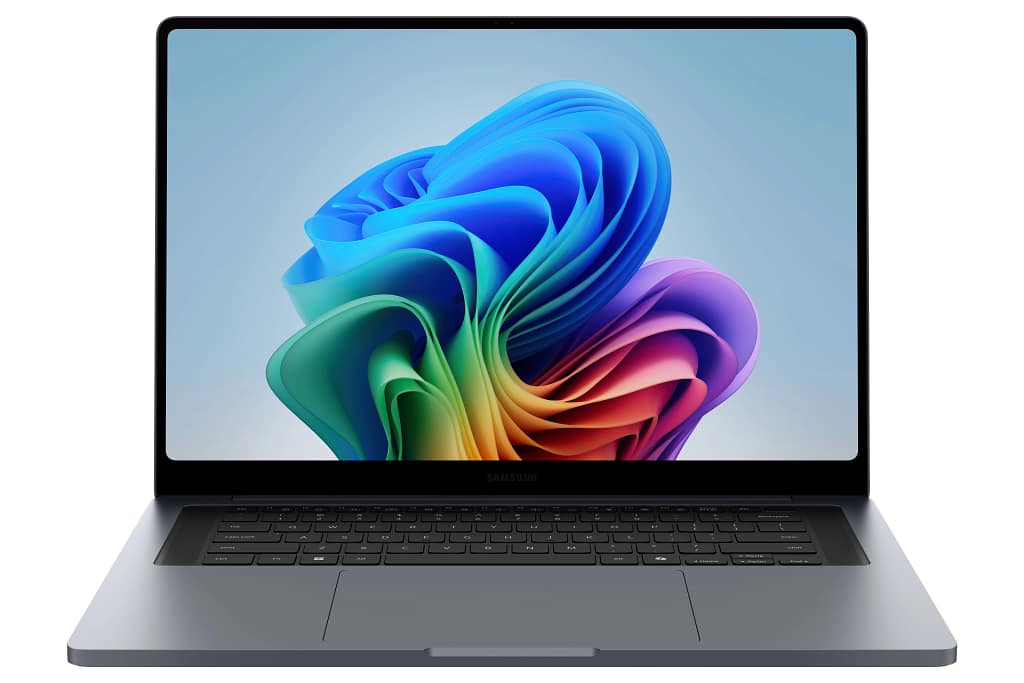
Most people had quietly written Samsung’s laptop division off. And honestly, who could blame them? For years, the Galaxy Book lineup sat in a comfortable but uninspiring middle ground — well-built, competent, and almost entirely forgettable. That changed at CES 2026. When Samsung pulled back the curtain on the Galaxy Book 6 series, the reaction wasn’t polite applause; it was genuine surprise. The Galaxy Book6, Galaxy Book6 Pro, and Galaxy Book6 Ultra don’t just represent a spec refresh. They represent Samsung finally deciding it wants to compete at the top of the Windows laptop market, for real this time.
I’ve been following Samsung’s PC efforts for a while, and honestly, I didn’t expect them to make a move this aggressive this soon. The combination of Intel’s most advanced silicon, a fully redesigned thermal system, AMOLED displays borrowed from flagship phone technology, and a deep Galaxy AI software stack makes this the most complete laptop lineup Samsung has ever shipped.
Three Models, Each With a Clear Identity
What I find interesting here is that Samsung didn’t just create three price points for the same machine. Each tier of the Galaxy Book6 series genuinely occupies its own territory. The base Galaxy Book6 starts at $1,049 with a 14- or 16-inch touchscreen and integrated graphics—a clean choice for everyday productivity buyers who want AI features without paying a premium. The Pro steps up to a dynamic AMOLED 2X display and Intel Arc graphics starting at $1,599. The Ultra goes all in with discrete NVIDIA RTX graphics, 32GB of RAM as standard, a six-speaker audio system, and a price starting at $2,449.
What most articles missed when covering the launch is how Samsung handles AI across the tiers. Every single model — including the base — ships with the full Galaxy AI software stack and NPU performance reaching up to 50 TOPS. That means you don’t lose Copilot+ capabilities or AI-driven features by choosing the entry model over the Pro. That’s a smart and notably user-friendly decision that removes the usual anxiety around feeling like you’ve bought into an underpowered tier.
Intel 18A: The Chip That Changes the Equation
The performance foundation across the entire Galaxy Book6 series is Intel’s Core Ultra Series 3, codenamed Panther Lake. These are the first client SoCs built on Intel’s 18A process—Intel’s most advanced fabrication node ever, operating at a 1.8-nanometer class level. The result is up to 60% faster CPU performance compared to the previous generation. with up to 16 new P-cores and E-cores and an integrated NPU delivering up to 50 TOPS for on-device AI tasks.
After looking into this more closely, I can tell you that the Intel Arc B390 Xe3 GPU inside the Galaxy Book6 Pro is more capable than most people are giving it credit for. Early Geekbench benchmarks show GPU performance sitting between an NVIDIA GTX 1650 Ti and RTX 3050 laptop GPU—which means light gaming at 60fps is genuinely on the table for the base and Pro models, not just the Ultra. That’s not a headline Samsung is shouting, but it’s a detail worth knowing if gaming occasionally matters to you.
The base model is available with a Core Ultra 7 355 or Core Ultra 5 325; the Pro extends the options to an Ultra X7, and the Ultra can be configured with an Ultra 9 or Ultra X9 chip, reaching up to 5.1 GHz clock speeds. For professionals handling compute-heavy tasks—video editing, 3D rendering, large dataset processing—this hierarchy gives you genuine flexibility at every price point.
Galaxy Book6 Ultra: Where Samsung Gets Serious
The Ultra is the headline machine, and it earns that title without caveats. Paired with an NVIDIA GeForce RTX 5060 or RTX 5070 laptop GPU from NVIDIA’s latest Blackwell architecture, the Galaxy Book6 Ultra handles next-level creative workloads—AI-accelerated image generation, high-speed video editing, and immersive gaming—in a chassis that measures just 15.4 mm thin and weighs 4.17 pounds with the RTX configuration.
This is one of those things I genuinely got excited about the moment I saw it: getting RTX 5070 power into a sub-16 mm laptop is not something most brands have pulled off without noticeable thermal compromise. Samsung credits a completely redesigned thermal system for making it possible. The vapor chamber in the Ultra was redesigned with a larger surface area; a new dual-path outlet fan and heatsink were added; the inlet grill was expanded for better airflow; and Samsung’s proprietary uneven blade spacing technology actively minimizes fan noise. The result is 35% better cooling efficiency compared to the Galaxy Book5 Pro — a real number, not marketing copy.
Tom’s Hardware called the Galaxy Book6 Ultra a natural choice for anyone who gravitates toward the 16-inch MacBook Pro but wants Windows. That’s high praise from a publication that doesn’t hand it out lightly.
Galaxy Book6 Pro: The Detail Nobody Is Talking About
The Pro is getting less attention than it deserves, and that’s the part of this story that most people are sleeping on. For the first time in Samsung’s lineup history, the Galaxy Book6 Pro receives a vapor chamber cooling system—previously a feature exclusive to the Ultra tier. That engineering upgrade means the Pro can sustain heavy workloads without thermal throttling in a chassis that weighs just 1.59 kilograms at 16 inches and 1.24 kilograms at 14 inches.
Having used previous-generation Samsung laptops before, this felt like a big step forward. The Pro 16-inch model also measures just 11.9mm thin, making it genuinely one of the slimmest performance laptops in its class. For designers, consultants, and mobile professionals who move constantly between offices, travel heavily, or simply refuse to carry a heavy bag, the Galaxy Book6 Pro makes a compelling case that you don’t have to sacrifice sustained performance for portability.
Displays, Battery, and the Haptic Touchpad Nobody Mentioned
The Galaxy Book6 Pro and Ultra both use Samsung’s Dynamic AMOLED 2X display at WQXGA+ resolution (2880 × 1800 pixels), with adaptive refresh up to 120Hz, peak HDR brightness of 1,000 nits, and Gorilla Glass DXC anti-reflective protection. For color-sensitive creative work, these panels stand alongside the best displays in the Windows laptop market.
The Galaxy Book6 Ultra also introduces a haptic touchpad to Samsung’s laptop lineup — a detail that barely made headlines but matters in daily use. Unlike mechanical touchpads that physically click, haptic touchpads use vibration motors to simulate the click sensation, delivering uniform feedback across the entire surface with no dead zones at the edges.
On battery, both the Ultra and Pro are rated for up to 30 hours of video playback. Even accounting for real-world conditions being less optimistic than internal testing, these are strong numbers. Super Fast Charging 2.0 pushes the battery to around 63% in just 30 minutes using a 65W USB-C charger — and that charger works with Samsung phones and tablets. The base model gets standard fast charging at 33% in 30 minutes, a meaningful upgrade over the previous generation.
Galaxy AI: More Than a Bullet Point
Samsung has built a comprehensive AI layer into every Galaxy Book6 model. Features like AI Select, natural language search, Link to Windows, Multi Control, and Second Screen work together to create a connected ecosystem that genuinely rewards users already inside the Samsung world. If you’re running a Galaxy phone and a Galaxy Tab alongside the Book6, the cross-device experience is closer to what Apple achieves with its ecosystem than any Windows laptop has managed previously.
Industry insiders hint that Samsung is planning deeper Galaxy AI integration updates across the Book6 series later in 2026, potentially including real-time AI translation during video calls and enhanced AI-powered editing tools that work offline through the NPU. Sources suggest an enterprise-focused Galaxy Book6 Enterprise Edition is also planned for late spring 2026, bringing managed IT environment features for corporate deployments.
Many believe that Intel’s 18A process node represents a genuine turning point for the company’s competitive standing in mobile silicon—and the Galaxy Book6 series being built on that foundation means Samsung is positioned to benefit as Intel’s performance-per-watt story improves over the next generation. The Galaxy Book6 isn’t just a strong laptop for today. It’s a platform built on architecture that gets more interesting as software catches up to the NPU capabilities already sitting inside these machines.
The Galaxy Book6 series is available at Samsung.com, Best Buy, and Samsung Experience Stores across the US. The base model starts at $1,049.99, the Pro at $1,599.99, and the Ultra at $2,449.99.