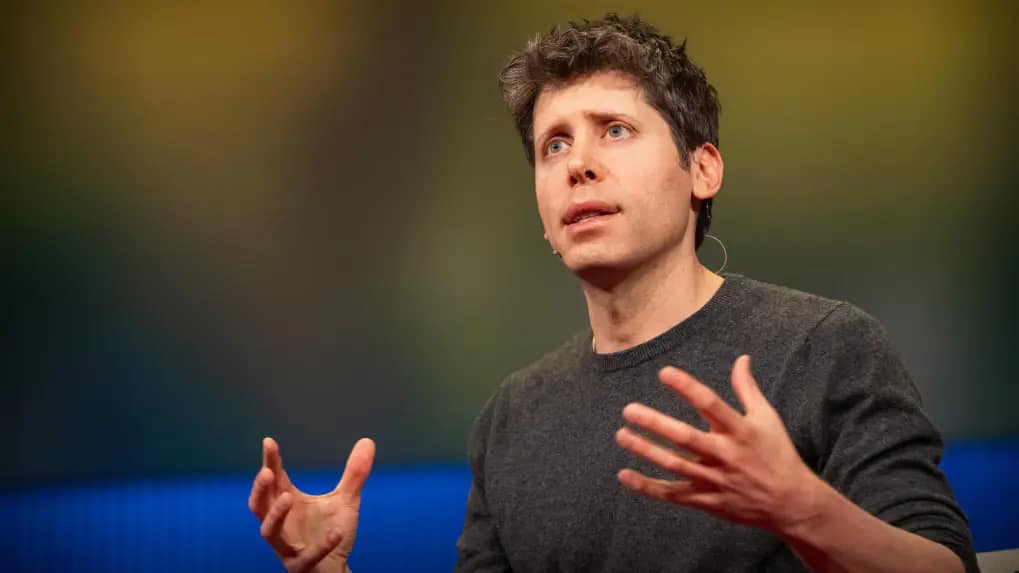
Sam Altman, CEO of OpenAI, addressed the growing discourse surrounding the environmental footprint of artificial intelligence at the India-AI Impact Summit 2026 in February. He pushed back against public perception regarding AI’s resource consumption, particularly claims about excessive electricity and water use for models like ChatGPT. Altman emphasized that training and sustaining a single human over 20 years requires far more energy than critics often acknowledge in their arguments against AI data centers.
This perspective came as Altman refuted the validity of viral claims, such as those suggesting 17 gallons of water per query. He specifically targeted the “per query” metric as fake for modern closed-loop cooling systems, which recirculate water within a sealed system and significantly reduce direct water withdrawal metrics that critics often cite. Researchers at UC Riverside still maintain that indirect water use—at the power plant level supplying data centers—remains a significant factor in AI’s total footprint, adding layers to the ongoing debate.
The Biological Benchmark: Decoding Altman’s Logic
From a biological perspective, the comparison is provocative. Altman pointed out that raising one human involves about 20 years of caloric intake, based on a standard 2,000-calorie daily diet, totaling roughly 17 megawatt-hours of energy equivalence over that period. This draws not just from food but from the cumulative knowledge and survival efforts of billions across generations, which AI models emulate in compressed training phases.
In contrast, training GPT-3 consumed an estimated 1,287 megawatt-hours, while GPT-4 is estimated at nearly 50 gigawatt-hours.
EnergyHuman≈17 MWh vs. EnergyGPT−4≈50,000 MWh
Energy
Human
≈17 MWh vs. Energy
GPT−4
≈50,000 MWh
Altman argued that AI’s one-time training investment then serves billions of queries efficiently, unlike humans who demand constant energy for thinking, working, and living. Per-query efficiency has improved dramatically, with a 2026 Epoch AI study showing a GPT-4 query now uses roughly 0.3 watt-hours—ten times less than 2023 estimates and comparable to a Google search.
Altman also tied his stance to actionable investments. He has personally committed hundreds of millions of dollars to Helion Energy, a nuclear fusion startup whose Polaris prototype uses deuterium-tritium fuel tests. In February 2026, it reached a record 150 million degrees Celsius, achieving the thermal conditions necessary for commercial fusion viability through Altman’s strategic capital allocations in fusion tech.
Reaction and Recoil: The Public Response
Viral threads captured the raw backlash, like David Fairchild’s widely shared post calling Altman’s logic a dehumanizing sleight of hand and Max Weinbach’s takedown of the “meat computer” analogy as cynical tech arrogance. Technical forums like Reddit saw thousands of upvotes and heated comment threads, with users split between those praising the human energy reminder and others slamming it as evasion of AI’s grid strain.
Ethicists and digital humanities scholars argued that Altman’s view reduces the human experience to that of an inefficient “meat computer”—relegating twenty years of biological development to a mere training run. The water claim drew particular scrutiny. While Altman rejected exaggerated direct-use figures as baseless, UC Riverside’s grounded estimate of roughly 500 ml—one 16-ounce bottle—for every 10 to 50 prompts factors in cooling, underscoring that total indirect impacts demand scrutiny.
This friction highlights a growing mandate: tech giants can no longer treat environmental costs as an afterthought to progress. Participants broke down comparisons, noting AI’s reusability offers leverage that individual humans cannot match at scale, even as ongoing server power and cooling needs persist beyond initial training.
Efficiency vs. Total Demand: The Sustainability Gap
Altman’s optimism intersects with the Jevons Paradox, where gains in efficiency often lead to higher total consumption as usage expands. As AI tasks become cheaper and more accessible—now at Google-search levels—demand surges, potentially offsetting per-query savings with broader adoption. Microsoft and OpenAI, scaling Power Purchase Agreements (PPAs) for renewables, are effectively becoming energy companies themselves, channeling billions into solar and wind to fuel data centers.
In the United States, this plays out vividly. Massive data centers in states like Iowa and Virginia host much of the world’s AI compute, driving investments into renewables. Shifts toward solar and wind aim to meet surging needs, aligning with Altman’s calls for accelerated clean energy deployment.
The 2026 Regulatory Landscape
The transition from voluntary ethical guidelines to enforceable statutory mandates has fundamentally altered the legal landscape for OpenAI. The California Transparency in Frontier AI Act, effective January 2026, requires developers like OpenAI to disclose detailed safety frameworks—including risk assessments for systemic threats—and environmental impact reports on energy and water use. Provisions mandate third-party audits for models exceeding certain compute thresholds, with fines for non-compliance, positioning Altman’s defense as a proactive response to mounting legal pressures.
Regulators in the United States and the EU are pushing further for transparency, ensuring firms track metrics amid rapid expansion. Globally, this fosters verifiable green practices, balancing growth with stewardship. Infrastructure clusters near power sources minimize latency, while federal pledges—like Microsoft’s carbon-neutral goals tied to OpenAI—target real progress, though water scarcity in arid regions remains a concern.
Infrastructure and User Implications
For the average user, the implications are twofold. AI tools integrate deeper into daily life—from work aids to creative helpers—provided energy constraints are addressed through systemic innovation. Query efficiency data from Epoch AI directly supports Altman’s claim that AI has caught up to human-like frugality per task. This thermal threshold for Helion’s deuterium-tritium tests marks the break-even point where fusion energy output exceeds input—a holy grail for clean computing that could decouple AI growth from carbon-intensive grids.
With nuclear restarts, solar booms via expanded PPAs, fusion milestones like Helion’s, and regulatory nudges, the energy equation could tilt toward abundance. Yet Altman’s “intelligence-per-watt” metric feels more like a bold vision than an immediate reality—achievable only if fusion delivers and regulators enforce accountability without stifling progress.