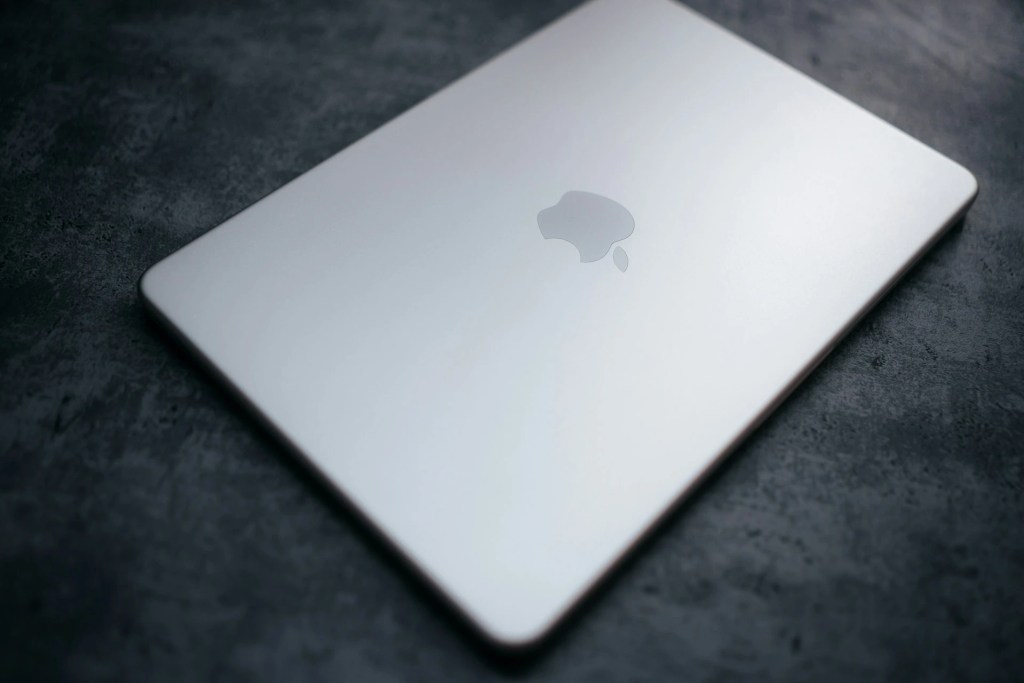
Apple just pulled off something the tech world didn’t see coming. The MacBook Neo—announced on March 4, 2026, and released on March 11—isn’t just a cheap laptop with a flashy price tag. It is the first Mac ever to run an iPhone chip, the most repairable MacBook in 14 years, and a product whose deeper story is only now beginning to surface. Most articles have covered the four colors, the $599 sticker price, and the battery life. This one goes further—into the chip-level decisions, the repairability revolution hiding inside the chassis, and the rumor cycle around the MacBook Neo 2 that has already flipped completely upside down in a matter of weeks.
I didn’t expect this angle when I started researching—and that’s exactly why it matters.
The Chip-Binning Story Nobody Explained
Here’s something most MacBook Neo coverage completely glosses over: the A18 Pro chip inside the Neo is not the same A18 Pro that powered the iPhone 16 Pro. On paper, they share the same name, but Apple practiced chip binning, deliberately disabling one GPU core before shipping the chip inside the Neo. The iPhone 16 Pro launched with a 6-core GPU. The MacBook Neo ships with a 5-core GPU. One core was quietly switched off.
Chip binning is a well-known manufacturing technique used across the semiconductor industry. Not every chip that rolls off a production line passes every quality check at full configuration. Rather than scrapping silicon that doesn’t fully qualify for a flagship product, Apple bins it into lower-tier devices that can work fine with a reduced spec. What this means in practice is that the MacBook Neo is effectively built on overflow from iPhone 16 Pro production—chips that didn’t make the full 6-core GPU cut for the iPhone 16 Pro but are entirely capable of running macOS at $599.
When I first heard about this, I didn’t think much of it, but after digging in, I changed my mind completely. Apple’s ability to cross-pollinate iPhone and Mac production at this level is something no other laptop maker on the planet can replicate. The cost savings aren’t just on paper; they’re embedded in a supply chain Apple spent years building and scaling.
The MacBook Neo Proves the iPhone Could Already Run macOS
This is the angle that deserves far more attention than it has received. The MacBook Neo runs full macOS Tahoe—not a lite version, not a scaled-down variant, the exact same operating system that powers the most expensive MacBook Pro. The chip making this possible, the A18 Pro, was originally designed for a smartphone. And yet, according to Apple’s own testing, the MacBook Neo with that iPhone chip is up to 50% faster for everyday tasks than the best-selling PC running the latest Intel Core Ultra 5 processor and up to 3x faster on on-device AI workloads.
So here is the question worth sitting with: if the A18 Pro inside a $599 laptop can run full macOS, handle 4K video editing, and outperform a mainstream Intel-powered Windows machine, why can’t the exact same chip inside an iPhone 16 Pro do the same thing? Technically, there is no hardware reason it couldn’t. The barrier is entirely a software and business decision.
Apple controls both the chip and the operating system, which means it also controls exactly where the line between iOS and macOS is drawn. The MacBook Neo has made that artificial boundary more visible than ever. Apple’s vertical integration gives it a unique advantage here—the same chip architecture serves both a phone and a laptop without missing a beat, and that’s not something any of its competitors can say right now.
Apple Quietly Built the Most Repairable MacBook in 14 Years
The part of this story that genuinely didn’t get enough attention is what’s happening inside the MacBook Neo’s chassis. iFixit—the repair advocacy organization whose teardowns are considered the industry gold standard—awarded the Neo a repairability score of 6 out of 10. That is the highest score given to any MacBook in approximately 14 years. The last time Apple earned a comparable score was around 2012, just before the Retina MacBook Pro era kicked off a long stretch of glued-in batteries, soldered components, and parts pairing that made independent repair extraordinarily difficult and expensive.
The MacBook Neo breaks from that in ways that matter. The battery — a 36.5-watt-hour cell — is held down by 18 screws to a removable tray rather than being adhered with stretch-release adhesive strips. iFixit reported that this change “sent cheers across the iFixit office” and said, “Screws still beat adhesive every time.” The USB-C ports are their own separate module, meaning a broken port no longer requires replacing the entire logic board.
The display comes off cleanly once the hinge screws and antenna assembly are removed—iFixit described it as popping away “as if it were a Framework laptop.” The internal layout itself is described as a flat disassembly tree, meaning most of the components a repair technician would need to access—battery, speakers, trackpad, ports—are all visible and reachable without removing other parts first. Apple also published a full official repair manual on the day the device went on sale. After looking into this more closely, I can tell you this repairability story is probably the most underreported angle of the entire MacBook Neo launch.
Why Apple Made the Neo More Repairable
Multiple sources, including iFixit themselves, point to EU battery regulations as a major driver behind this design shift. European legislation has been pushing manufacturers to make batteries more accessible to consumers and independent repair shops, and the MacBook Neo’s screwed-in battery design is a direct response to that pressure.
The important open question now is whether Apple carries this design philosophy forward to the MacBook Air and Pro lines or whether the Neo remains an isolated case. If screwed-in batteries and modular ports become standard across the MacBook lineup, the long-term cost of owning a Mac changes meaningfully—and that matters a lot to the student and budget market Apple is clearly targeting.
The Chromebook Market Is Apple’s Real Target Here
iFixit’s own teardown report put it plainly: the MacBook Neo is aimed at the same broad market “currently dominated by Chromebooks, which are used in 93% of American K-12 schools. “That single line from iFixit contains the clearest statement of Apple’s strategic intent for this product. At $499 for qualifying students and educators and $599 for everyone else, the MacBook Neo is the first Mac that school procurement teams can realistically evaluate side-by-side with a Chromebook—not just in terms of price, but in terms of repairability and total cost of ownership.
Honestly, this is the part of the story that most people are sleeping on. School IT departments don’t just look at the sticker price of a laptop—they weigh how long it will last, how much repairs cost, and how easy it is to service a fleet of dozens or hundreds of devices. The MacBook Neo’s modular ports, accessible battery, and day-one repair manual all strengthen that case directly.
A machine that can have its battery swapped without a heat gun and its broken USB-C port replaced without touching the logic board is a fundamentally different ownership proposition than any MacBook that came before it. The fact that the Neo is thicker than the MacBook Air is not a design oversight—it is partly a deliberate choice to create the internal space that makes this level of repairability possible.
MacBook Neo 2: The Rumor Cycle That Already Flipped Twice
A second-generation MacBook Neo is widely expected to arrive in 2027, according to analyst Ming-Chi Kuo—and the rumor cycle around it has already gone through a complete reversal inside of a few weeks, which is worth understanding carefully.
Back in September 2025, Kuo stated that the MacBook Neo 2 “could” include a touchscreen, citing the fact that over half of Chromebooks already support touch input. That was the “yes” phase. A week after the first Neo launched, Kuo walked that back, saying a touch on the Neo 2 “may not” happen after all.
Then Bloomberg’s Mark Gurman weighed in with the most definitive statement yet: “I’d be shocked if a touch screen comes to the Neo in the next three years.” The reason is straightforward—adding a touchscreen assembly would increase production costs, and the entire commercial logic of the MacBook Neo depends on keeping the price at $499 to $599. Compromise the price, and you compromise the product’s purpose entirely.
According to reports, the MacBook Neo 2 is instead expected to receive an upgrade to an A19 Pro chip from the iPhone 17 Pro generation, which would most likely bring 12GB of unified memory, directly addressing the current model’s most criticized limitation. Kuo has estimated that the first-generation Neo will ship 4.5 to 5 million units in 2026, with 2 to 2.5 million in the first half of the year alone. Industry insiders hint that if those numbers hold, Apple will move quickly and confidently on the second generation.
The MacBook Ultra and What It Means for the Whole Lineup
The broader picture here is that Apple may be moving toward four distinct MacBook tiers for the first time. The Neo sits at $599. The MacBook Air with the M5 chip handles the mid-range. The MacBook Pro covers professional workloads. And Bloomberg’s Mark Gurman has suggested that Apple is developing a new machine that could be positioned above the existing MacBook Pro line—potentially carrying the name “MacBook Ultra”—featuring an OLED touchscreen, a redesigned form factor, and next-generation M-series silicon, expected in late 2026 or early 2027.
If that product arrives, Apple will have a laptop at every meaningful price tier simultaneously, something it has never had before. The MacBook Air didn’t just add an affordable option at the bottom of the lineup—it triggered a restructuring of the entire MacBook family from the ground up.
The MacBook Neo Is Apple’s Most Calculated Product in Years
When you look at the full picture, the MacBook Neo makes more strategic sense than almost any Apple product in recent memory. It runs full macOS on an iPhone chip and outperforms Windows machines that cost the same. It uses supply chain infrastructure Apple already had running at scale for the iPhone 16 Pro. It is the most repairable MacBook since 2012. It targets a student and budget market that Chromebooks have controlled for years, at a price point where no Mac has ever competed before. And it sets up a MacBook lineup expansion — potentially including a MacBook Ultra — that Apple could not have credibly executed without establishing a new price floor first.
The MacBook Neo is not a perfect machine. The 8GB of non-upgradeable unified memory draws fair criticism. The base model has no keyboard backlight. One of its two USB-C ports runs at USB 2.0 speeds. These are genuine trade-offs, and they are deliberate ones—every single decision that was made to hit $599. Apple has been engineering desire and product differentiation for decades. The MacBook Neo is simply the latest, most quietly strategic example of how it does that better than anyone else in the business.


