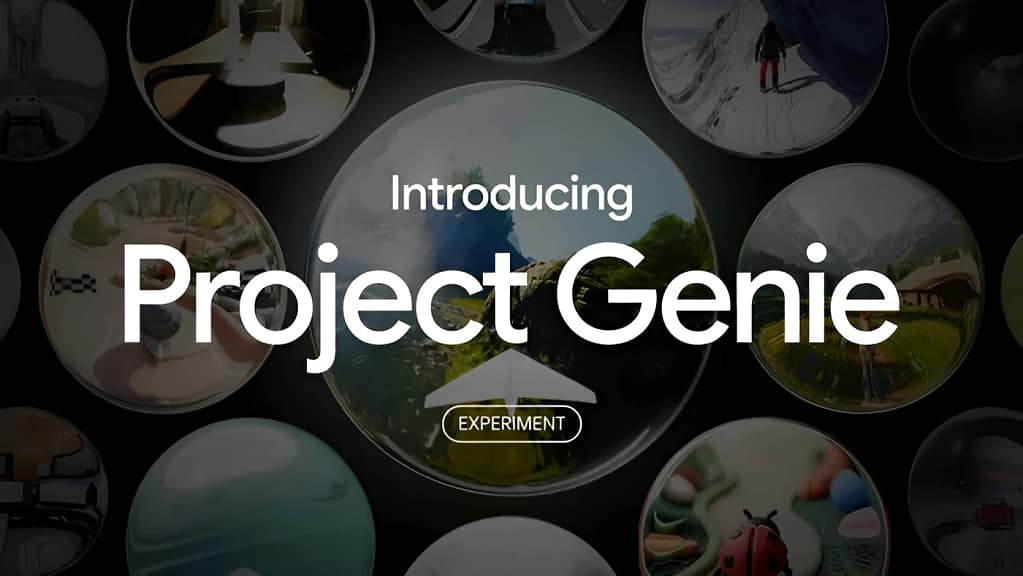
Imagine typing “a neon-lit cyberpunk city floating on marshmallow clouds” and stepping right into it—walking streets, dodging hovercars, and feeling the fog roll in real-time. That’s Project Genie, Google DeepMind’s mind-bending prototype turning sci-fi dreams into playable worlds. This conceptual piece explores what such a tool could look like if launched in 2026, building on DeepMind’s real 2024 Genie research.
From Research Lab to Your Screen: The Origins
Project Genie builds on years of DeepMind wizardry, starting with the 2024 Genie model that wowed with video-game-like environments from text alone. A hypothetical Genie 3 would ramp up physics and consistency: 720p worlds at 24 fps, predicting actions and memory for coherent adventures. Trusted testers from gaming, robotics, and film could feed feedback into a consumer prototype. Google Creative Lab might wrap it in a slick interface, blending advanced brains with Imagen-style image generation and Gemini reasoning. Why? DeepMind views world models as AGI’s backbone—AI must navigate dynamic chaos to think like us. No more static pics; it simulates “what happens next.”
How It Works: Prompt, Explore, Remix
Fire up conceptual labs.google/genie, pick a first/third-person view, and prompt with text like “claymation jungle with chocolate rivers” or upload a photo. Genie 3 generates a 60-second explorable world in seconds—wander, interact, and watch physics unfold (boulders tumble, water splashes). Hit the limit? It loops seamlessly, maintaining consistency so your castle doesn’t morph mid-stroll. Remix mode tweaks on-the-fly: “Add laser sharks.” Google’s latest generative models sharpen visuals; Gemini handles complex prompts. Physics-aware—gravity and collisions evolve naturally. Demos might show marshmallow fortresses crumbling or alien biomes pulsing. Not infinite yet, but real-time navigation feels alive.
Platforms Affected: Web-Only, Subscribers First
This vision lives in browsers via Google Labs—no downloads, desktop/mobile Chrome (18+ in the U.S. only initially). Aimed at creators, it’s a web app for rapid prototyping. A premium Google AI subscription unlocks it, bundling advanced Gemini, video generation, and more. Rollout could start limited, expanding globally later; an international waitlist is possible. Responsive design shines on tablets. Affected ecosystems: game development for quick Unity/Unreal prototyping, education for virtual field trips, and filmmaking for pre-vis sets. Robotics simulates training sans hardware; everyday users get dreamscapes for therapy or vacations.
Project Genie Pricing: Premium Access, Enterprise Focus
Free? Unlikely in this concept—tied to a high-tier Google AI subscription, say $99/month for pros with deep pockets, justified by enterprise-grade compute demands. Basic plans ($20/mo) or free Gemini stays locked out. Why pay? Unlimited access, priority compute for heavy world-building. Framed as a “research preview,” feedback shapes future tiers. Critics might gripe about paywalling tech, but scaling needs funding. Past lab tools like MusicFX eventually trickled down for free. Total cost: sub plus experimentation time—efficient at short clips.
Success Metrics: Early Wins and Challenges
In previews, testers could build robotics sims, animated shorts, and historical recreations with eerie accuracy. Success sparks “world model” wars—rivals like Runway or World Labs scramble. Viral demos rack views; buzz hails UX magic. Limitations: 60s cap avoids glitches; no dynamic events yet; occasional physics quirks like floating objects. Responsible AI includes watermarks, logs, and no harmful content. If scaled, it’s a game-changer; now, it’s a proof of concept.
Benefits Unleashed: Transformative Potential Across Industries
Success redefines creativity. Game developers prototype levels in minutes without artist teams—indies rival AAA, fueling Roblox growth. Filmmakers slash pre-vis time, generating sets from claymation to VFX, halving Pixar-like workflows.
Educators craft immersive lessons: walk the Colosseum or simulate labs without gear. Robotics trains bots in virtual chaos cheaply. Everyday users build therapy realms or vacation previews in hyper-real detail.
Core leap: AGI via embodied reasoning in simulated physics. Democratizes 3D content; no modeling skills needed. Shadows: Job fears for game artists; GDC surveys show unease, with warnings it could displace devs. Google would position it as augmentation.
Game design accelerates with cyberpunk cities from sketches. Film gets dynamic chocolate-river worlds. Robotics gains physics simulations. Education explores ancient Rome. Personal use offers dream escapes.
Launch Timeline: Conceptual Rollout and Future
Public access? Hypothetically rolling out to U.S. subscribers in early 2026, expanding globally soon after. Full consumer integration into Gemini/YouTube? No firm dates, but roadmaps tease longer sessions, event prompting, and multiplayer. DeepMind eyes AGI: Genie as agent-training playground. Watch earnings for tier drops or free access.
The Big Picture: Why Project Genie Matters
In 2026’s AI frenzy, this Genie vision isn’t vaporware—it’s a playable proof-of-concept for living worlds. Turning dreams into realities? Nearly here. Paywalls and caps aside, iteration speed thrills. Creators salivate; industries quake. Google’s bet: Simulate reality for superintelligence. Glitches? Like early Minecraft’s wonky blocks. Ultra-subbed stateside? Dive in conceptually. Others? Watch rivals race.
Note: This is a conceptual look at the future of AI world-building, inspired by Google DeepMind’s real Genie research. Not a factual news report.