Google Maps has quietly guided more than 2 billion people around the world for over two decades — and for most of that time, the core driving experience stayed pretty much the same. A flat 2D map, a blue line, a robotic voice. Functional? Absolutely. But somewhere along the way, it started to feel like the hardware had outgrown the software. That gap just got closed. Google officially rolled out Immersive Navigation on March 12, 2026, and it is being called the most significant update to the driving experience in over a decade — and honestly, after seeing everything it brings, that description feels accurate.
This is not a visual refresh. It is a fundamental rethink of what turn-by-turn navigation should feel and work like when powered by modern AI.
What Makes Immersive Navigation Different
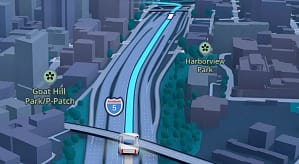
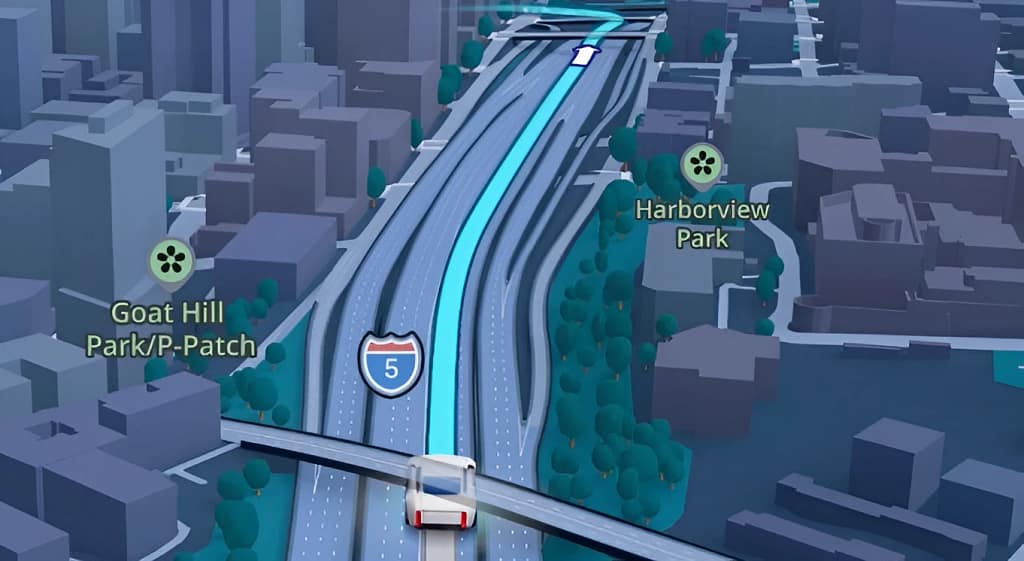
At its core, Immersive Navigation replaces the traditional flat 2D map view with a vivid, real-time 3D environment that reflects your actual surroundings. Instead of colored lines and generic icons, you now see the buildings, overpasses, terrain, crosswalks, traffic lights, and stop signs that are physically around you as you drive. The goal is to eliminate the guesswork from every turn.
What makes this possible is Google’s Gemini AI models working under the hood. Gemini analyzes fresh Street View imagery and aerial photography to render an accurate visual representation of your route — and not just once at the start. The data is continuously refreshed, drawing from a library of billions of real-world images so that what you see on screen closely matches what is actually outside your window.
I’ve been following Google Maps updates for a long time, and honestly, this feels like the first time the visual experience has been rebuilt from scratch rather than patched. The difference in how natural and readable the map feels is immediately obvious. Immersive Navigation feels like the first time map design has genuinely caught up to what modern hardware can do.
Google has also equipped the system with robust safeguards to prevent AI hallucinations — fabricated locations or incorrect directions — which is an important trust signal for a navigation tool that people genuinely rely on to get places safely.
5 Powerful Immersive Navigation Features Explained
1. Smart Zooms and Transparent Buildings
The 3D environment is the headline, but the visual intelligence goes deeper. Google has introduced smart zooms that automatically adjust your view as you approach complex intersections, lane merges, or tricky exits. You get a broader perspective exactly when you need it, not after the moment has passed.
Transparent buildings are another clever touch — the app lets you see through structures to understand what is happening on the road ahead, which is genuinely useful when you are navigating a dense urban junction with limited sightlines. Lane markers, crosswalk indicators, stop signs, and traffic lights appear on screen at precisely the right moment, giving you confident guidance rather than a vague general direction. If you have ever missed an exit because the 2D view gave you the turn instruction a beat too late, this is the fix.
2. Destination Previews Before You Leave
One of the genuinely clever additions in Immersive Navigation is the ability to preview your destination and its surroundings using Street View imagery before you ever start the car. If you are heading somewhere unfamiliar, you can scout the area in advance — check what the building looks like, where the nearest parking is, and get a feel for the street layout.
As you get close to your destination, Maps highlights the building entrance, nearby parking options, and even which side of the street you need to be on. The last hundred meters of a journey are now just as guided as the first hundred kilometers. Arriving at a new place already knowing what to expect removes a surprising amount of stress from the experience.
3. Natural Voice Guidance That Sounds Human
One of the quieter but genuinely impactful upgrades in this update is how Google Maps now speaks to you. The previous voice guidance was reliable but robotic — clipped and mechanical in a way that always reminded you that a machine was talking. The new system is designed to sound like a knowledgeable friend in the passenger seat giving you directions.
Instead of a flat “Turn right in 500 meters,” you now hear things like: “Go past this exit and take the next one for Illinois 43 South.” That kind of phrasing carries context. It prepares you mentally for what is coming rather than issuing a bare instruction at the last possible second. Having used older Maps navigation regularly before this, this felt like a meaningful step forward — the kind of improvement you notice immediately and then can’t imagine going back from.
4. Smarter Route Intelligence With Real Tradeoffs
Immersive Navigation significantly improves how Google Maps handles the unpredictability of real driving. Every second, Maps processes over 5 million traffic updates from around the world, and this update makes that data work harder for you.
When an alternate route appears, Maps now explains the actual tradeoffs instead of just showing you a different line on the map. You might be told that one route adds six minutes but avoids a crash-related slowdown, or that a faster option includes a toll. That nuanced information lets you make a real decision rather than blindly accepting a reroute. Real-time alerts for construction and crashes are also included, powered by a community of drivers who contribute more than 10 million reports every single day.
5. Ask Maps: The AI Conversation Layer
Alongside Immersive Navigation, Google launched Ask Maps — a conversational AI experience powered by Gemini that lets you ask natural language questions directly inside the app. This is not just a search box with better autocomplete. Ask Maps can handle complex, real-world queries that a standard map could never answer before.
The feature draws from a database of over 300 million places and real reviews from a community of 500 million contributors. It can build a full trip itinerary with directions, ETAs, and local tips. Together, Immersive Navigation and Ask Maps cover the two things navigation has always struggled with: knowing how to get there and knowing where to go in the first place.
What Experts Are Predicting Next
The industry is already reading between the lines of this update. Many believe this is not just about better driving directions — it is about laying the groundwork for a future where navigation integrates far more deeply with autonomous vehicle technology. Gemini’s ability to process multimodal data at this scale, combining satellite imagery, Street View, community reports, and real-time traffic, is exactly the kind of foundation that self-driving systems need to function reliably in complex urban environments.
Sources suggest that Google is actively exploring Gemini Lens integration within Maps — a feature that would let you point your phone camera at any landmark and instantly receive AI-generated context about it, blurring the boundary between digital navigation and physical exploration. Industry insiders also hint that future updates may bring exit number display preferences and even more granular control over the level of visual detail shown — two things early users have already been requesting loudly.
The global rollout timeline beyond the US remains broad and unconfirmed, but given the scale of this launch, it is reasonable to expect that major international markets will see Immersive Navigation before the end of 2026.
Availability Right Now
Immersive Navigation is rolling out in phases. It launched on March 12, 2026, for users in the United States, and Google has confirmed that availability will expand over the coming months to eligible iOS and Android devices, CarPlay, Android Auto, and vehicles with Google built-in. Ask Maps is rolling out simultaneously in the US and India on Android and iOS, with desktop support arriving soon.
For those outside the US, the wait may feel long given how significant this update is. But the global expansion is confirmed, and when it arrives, it will raise the bar for what drivers everywhere expect from a navigation experience.
Google Maps built its reputation on data depth and reliability. Immersive Navigation is what happens when that foundation finally gets the visual and intelligent overhaul it deserved. This is navigation, properly reimagined for the era we are actually living in.