Search used to be a one-way conversation. You typed something in, Google handed you a list of blue links, and you did the rest. That model survived for more than two decades. But what Google announced at I/O 2026 this week makes it clear that era is officially over.
The company has introduced what it calls “information agents,” a new class of AI-powered tools built directly into Google Search. These aren’t just smarter autocomplete or a fancier AI Overview. These agents run continuously in the background, 24/7, scanning the web on your behalf and alerting you the moment something relevant happens. And the step change in capability here is real.
What Are Google AI Agents and How Do They Work
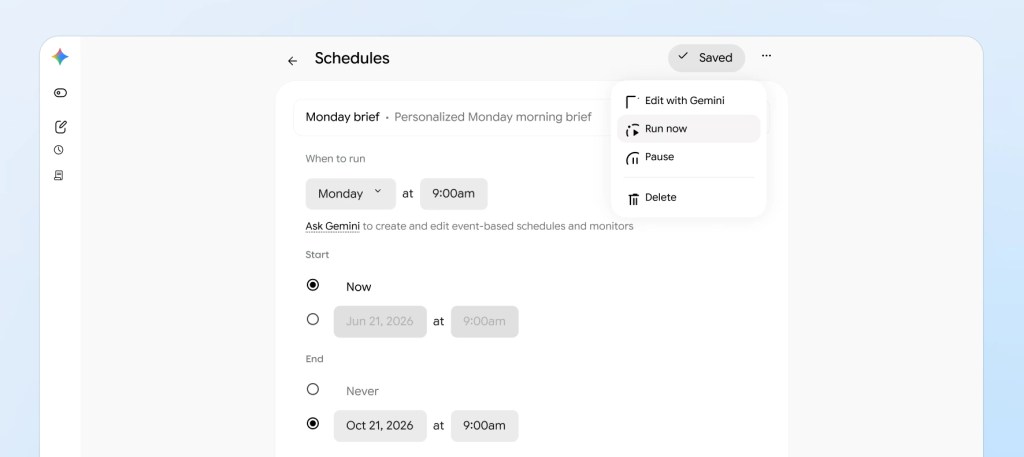
The core idea behind Google’s information agents is simple: instead of you going to Google every day to check whether something changed, Google’s AI does the checking for you. You set up an agent once, tell it what you’re tracking, and it keeps going.
According to the official Google I/O 2026 blog, these agents can look across everything on the web, including blogs, news sites, and social posts, as well as real-time data sources like finance, shopping, and sports. When something relevant appears, the Google app sends you a push notification with a synthesized, actionable update.
What I find interesting here is that Google is essentially positioning this as the spiritual successor to Google Alerts, the notification service it launched all the way back in 2003. That tool was useful but blunt. These agents are smarter. Instead of keyword matching, they reason across multiple sources, weigh context, compare perspectives, and deliver something more like an intelligent briefing than a raw alert.
To get started, all you need to do is open AI Mode in Google Search and describe what you want to track. For example: “Keep me updated on nearby movie tickets for The Mandalorian and Grogu.” The agent takes it from there. You can create, customize, and manage multiple agents across different topics simultaneously, all through the same interface.
Google AI Agents Use Cases That Actually Matter
The practical range here is wider than most headlines are covering. TechCrunch reported several examples straight from Google’s own demos. Someone’s apartment hunting can give the agent their full wishlist (price range, neighborhood, natural light, pet-friendly) and let it scan listings continuously, notifying them the moment something matching appears. Someone following the stock market can set an agent to monitor specific companies, track earnings reports, and surface breaking news relevant to a portfolio.
But honestly, this is the part of the story that most people are sleeping on: the everyday use cases. Tracking flight prices before a trip. Monitoring your favorite sports team’s injury updates before a game. Following a sneaker release, so you don’t miss the exact size drop. Keeping tabs on job listings in a fast-moving hiring market. None of these things required sophisticated research skills before, but they did require daily manual effort. Google’s agents eliminate that entirely.
Sources suggest that Google plans to expand the agentic capabilities into shopping as well, with the ability to set an agent that monitors online stores for specific products and sizes, notifying you when something becomes available. It’s rumored that broader agentic shopping integrations, including actions the AI can take on your behalf through Google’s Universal Commerce Protocol, will roll out later this year with Amazon, Microsoft, and Stripe among the early partners.
Who Gets Google AI Agents First
Here’s where things get a bit complicated. Information agents are launching this summer, but they’re rolling out first to Google AI Pro and Ultra subscribers in the United States, with additional markets coming afterward.
The pricing structure for Google AI has also been updated at I/O 2026. A new Google AI Ultra plan is launching at $100 per month, while the previous top-tier Ultra plan is dropping from $250 per month to $200 per month. If you’re not a subscriber, free users and standard account holders will need to wait for a broader rollout, though Google has confirmed the long-term plan is to make most AI features more broadly accessible over time.
AI Mode itself, which powers the agent setup, already has significant reach. Google confirmed at I/O that just one year after launching, AI Mode has surpassed one billion monthly users globally, with queries more than doubling every quarter. That’s a pretty remarkable adoption curve for a feature that started as a Search Labs experiment open only to Google One AI Premium subscribers in the US.
A New Search Box and What It Means
Alongside the agents, Google also unveiled what it describes as its biggest upgrade to the Search box in over 25 years. The redesigned interface is built for longer, more conversational queries. It dynamically expands so you have more space to describe complex needs. It supports multimodal inputs, meaning you can search using text, images, files, videos, and even Chrome tabs as context.
After looking into this more closely, I can tell you that the AI-powered query suggestion system is the detail most outlets missed. It goes far beyond traditional autocomplete, actively helping users formulate better, more nuanced questions. That’s a subtle but meaningful shift: Google is no longer just processing what you type. It’s now helping you figure out what to ask in the first place.
AI Mode is also now running on Gemini 3.5 Flash as the new default model for all users globally, replacing the previous version. Google describes it as delivering sustained frontier performance specifically optimized for agents and complex multi-step tasks.
The Bigger Picture for Google Search
Many believe that this shift from reactive search to proactive agents is the biggest structural change Google has made since introducing AI Overviews in 2024. If the current trajectory holds, it looks like the traditional blue-link results experience may increasingly become a fallback option rather than the primary one. Google confirmed at I/O 2026 that the “Web” tab will still be available for users who want the older browsing experience, but the default surface is clearly moving toward AI-mediated answers and agent-driven updates.
Personally, I think Google is making the right call here. The web produces a relentless amount of information every day, and manually filtering it through repeated searches is simply not a sustainable model for anyone with specific, ongoing information needs. An agent that monitors things for you and surfaces only what’s relevant, without you needing to go looking, is a genuinely useful addition to daily life.
What remains to be seen is how well the agents handle the inherent messiness of real-world data, from unreliable sources to rapidly changing contexts. But Google’s scale, access to real-time data across finance, shopping, and sports, and the underlying power of Gemini 3.5 Flash give these agents a stronger foundation than anything that’s come before. The era of typing a question and waiting for links is winding down. Google AI agents are what comes next.


