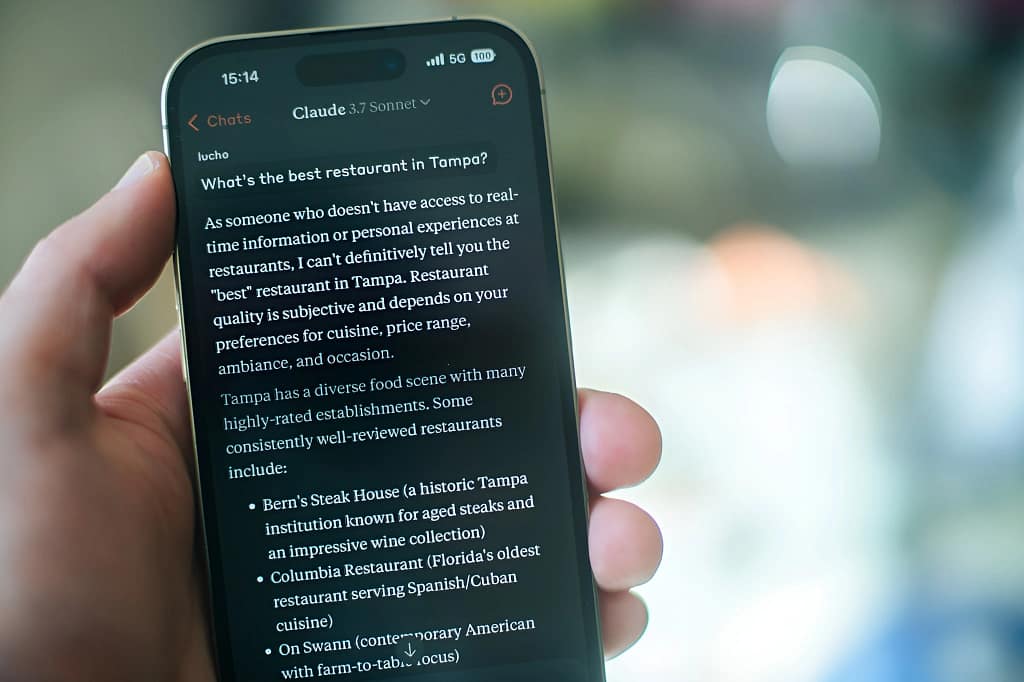
The AI space has a habit of crowning a new champion every few months — and then watching the hype quietly collapse. Claude AI is one of the rare exceptions. Since Anthropic launched it in early 2023, the conversation has only gotten louder, the user numbers have only gotten bigger, and the enterprise contracts have only gotten more serious. What is happening with Claude AI right now is not a bubble. It is a product with real staying power, and understanding why requires looking past the surface-level noise.
I’ve been following this for a while, and honestly, the pace at which Claude has gone from “interesting alternative” to “default choice for serious knowledge work” is one of the most underreported stories in tech right now. Most of the coverage focuses on the model benchmarks, which are impressive, but the real story is much deeper than that.
The Numbers Behind the Claude AI Surge
Start with the raw scale. Claude reached 30 million monthly active users and nearly 88 million website visitors—a remarkable milestone for a product that is barely two years old. The financial trajectory is equally steep. Claude hit $1 billion in quarterly revenue in Q3 2025 and is on track to generate over $3 billion for the full year. Anthropic’s valuation has climbed from $61.5 billion in early 2025 to a reported $350 billion following a funding agreement with Microsoft and Nvidia. These are not the numbers of a product living off hype alone.
What I find genuinely surprising — and what most articles completely bury — is the average session duration. Claude.ai users spend 13 to 14 minutes per session on average. That is an extraordinary number for any web-based tool. It tells you that people are not just casually opening Claude and bouncing — they are arriving with complex tasks, staying until those tasks are done, and leaving satisfied. That sustained engagement is what separates real adoption from inflated metrics.
What Actually Makes Claude AI Stand Out
The honest reason Claude AI gets talked about so much is that it performs well where it actually counts. Personally, I think the biggest differentiator is not raw speed or benchmark scores—it is the way Claude handles nuance and context over long sessions. Claude is considered the reliable default for serious knowledge work, especially when accuracy, context retention, and multi-step reasoning matter most. For developers and enterprise teams, that consistency is not a minor perk — it is the entire value proposition.
Constitutional AI: The Architecture Nobody Is Talking About
One of the most underreported differentiators behind Claude AI is Constitutional AI—Anthropic’s approach where ethics are integrated directly into the model’s core architecture rather than layered on as external filters after training. In practice, this makes Claude meaningfully less likely to fabricate confident-sounding nonsense, more careful around sensitive topics, and far more predictable in professional settings. Having used other leading AI tools before, this felt like a significant step forward the moment I started testing it on high-stakes research tasks—the difference in reliability was immediate.
For businesses deploying AI at scale, predictability is everything. A model that behaves consistently across thousands of queries, without requiring constant human review, is worth a premium — and Claude has clearly positioned itself to capture that premium market. You can read more about the broader AI safety conversation over at TechCrunch, which has covered Anthropic’s approach in depth.
Benchmark Performance in 2025
The technical credentials are hard to ignore. Claude Sonnet 4.5 currently leads as the world’s top coding model with 77.2% on SWE-bench Verified, while Claude Opus 4.1 achieves 80.9% on GPQA Diamond for PhD-level scientific reasoning and 90% on AIME 2025 with tool use for advanced mathematics. These are not small wins. The competition includes the best models from OpenAI and Google, and Claude is matching or beating them in the domains that enterprise customers care about most. After looking into these benchmarks more closely, I can tell you that the gap between Claude and its closest competitors is narrower than most people realize—which is exactly why the enterprise adoption numbers are so striking.
Enterprise Is Where Claude AI Is Really Winning
While ChatGPT dominates the consumer conversation, Claude AI has quietly built a formidable position in enterprise. 70% of Fortune 100 companies use Claude, with a 29% enterprise market share in 2025 — up from 18% just one year prior. Large-scale deployments span companies like Cognizant and Accenture, each integrating Claude into workflows at massive scale.
Claude processes 25 billion monthly API calls, with enterprise platforms accounting for a significant portion of that volume. The Model Context Protocol (MCP) that Anthropic introduced has made it significantly easier to build Claude into existing tech stacks, which has accelerated that adoption considerably. This connects directly to what we covered about how Claude AI is being used in real-world, high-stakes decision-making—the enterprise use cases are broader and more serious than most realize.
Claude AI vs. ChatGPT: The Honest Comparison
Current market share data places ChatGPT has approximately 59.7% of the AI chatbot market, while Claude sits at around 3.2%—a gap that sounds enormous until you look at what that 3.2% actually represents. Claude demonstrated the highest estimated quarterly user growth of 14% among the top players. The contradiction here is sharp: Claude has a relatively small consumer footprint, yet it commands nearly a third of the enterprise AI assistant market.
That divergence is not an accident — it reflects a deliberate product strategy aimed squarely at the high-value professional segment rather than casual consumer use. When I first saw the consumer share numbers, I didn’t think much of it, but after digging into the enterprise figures, I changed my mind completely about what Anthropic is actually building here.
The Verge has a solid breakdown of how the competitive dynamics between Anthropic and OpenAI are playing out at the product level — worth reading if you want the full picture over at The Verge. It is also worth noting how these dynamics are reshaping other corners of the tech world, including how AI tools are transforming creator earnings and platform monetization strategies.
Who Is Actually Using Claude AI?
The user demographics tell an interesting story that most coverage skips entirely. The largest age group using Claude is 18 to 24, making up 51.88% of all users — a generation growing up with AI tools as a core part of their everyday workflow. Geographically, the United States and India together represent over 33% of Claude’s total website user base, but meaningful adoption is spreading across the UK, Germany, Japan, Brazil, and beyond. Claude is not a regional product. It is a genuinely global one, and that global spread has important implications for where Anthropic can take the product next.
What Comes Next for Claude AI
Industry insiders hint that Anthropic is preparing a significant push into autonomous AI agents — systems that can plan and execute multi-step tasks with minimal human input. Many believe this is where Claude’s Constitutional AI framework gives it a structural advantage over competitors: a model trained with safety at its core is far more suitable for agentic workflows where outputs are harder to review in real time. Sources suggest that enterprise contracts currently in negotiation are specifically targeting this agentic deployment model, which would represent a major expansion of Claude’s role beyond the chat interface most users are familiar with.
On the pricing side, Anthropic has already moved: Sonnet 4.5 received a 25% price reduction in 2025, improving cost competitiveness while maintaining performance. Many believe further reductions are coming as the company scales its infrastructure. The trajectory suggests that Claude AI is not just riding the general AI wave—it is building the kind of institutional presence that will still be relevant long after the current hype cycle fades. And on a personal note, the more I look at what Anthropic has quietly built in the background, the more I think the real story of Claude AI has not even been written yet.
The combination of constitutional AI, elite benchmark performance, deep enterprise penetration, and a rapidly growing developer ecosystem makes Claude AI one of the most credible and consequential stories in tech right now. It has earned its reputation — and that is a much harder thing to build than most people realize. For more on how Big Tech’s competitive dynamics are shifting in 2026, check out our piece on Apple’s March 2026 product announcements.